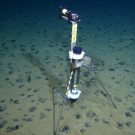
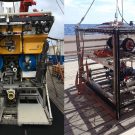
– The Ocean Floor Observation System (OFOS) and Remotely Operated Vehicle (ROV) – (deutscher Text siehe unten) Many samples that marine biologists gather during research cruises are taken “physically”, such as deep-sea mud that is heaved up from the seafloor onto the deck via different coring gears, and gets further processed in the labs. With […]
POS534: Mein erster Tag auf See
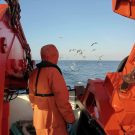
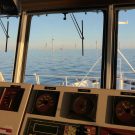
Als mein Wecker heute morgen klingelt, springe ich aufgeregt aus dem Bett, heute beginnt die 3 wöchige Forschungsfahrt auf der Nordee mit der Poseidon. Es ist meine erste Seefahrt und ich freue mich, die Wissenschaftler auf ihrer Expedition begleiten zu dürfen. Ich selber bin Studentin und studiere Physik des Erdsystems an der Christian-Albrechts-Universität in Kiel. […]
Schätze der Tiefsee / Treasures of the Deep
(English below) Manganknollen – Entstehung und wirtschaftliche Relevanz von Jessica Volz, Sophie Paul und Julia M. Otte Während der ersten globalen Forschungsexpedition der HMS Challenger in den 1870er Jahren wurde das große Ressourcenpotential der Tiefsee deutlich. An Bord der HMS Challenger wurden zahlreiche unbekannte marine Organismen sowie mineralische Konkretionen vom pazifischen und atlantischen Meeresboden, die […]
Land, ho! Kalmar!
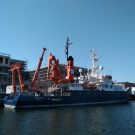
After the fair amount of work on the board and sampling the exciting marine organisms, Alkor brought us safely to Kalmar in Sweden, where two of our scientific crew left and two new participants joined us. For me, as a first-time-on-board-attendee, the arrival at the harbor was a great experience. All our scientific crew went […]
Fish talk!
One important goal of our long-term data series and of the present cruise is to increase the understanding of the feeding ecology, reproduction and population structure of key Baltic fish species. Why is Baltic cod getting thinner? How are herring and sprat competing for zooplankton? How are the two genotypes of cod in the Baltic, […]
First weekly report online!
Time flies out at sea. Benefiting from perfect, calm and sunny weather, we have now already completed hydrographic measurements and fish and plankton sampling in Kiel Bight, Mecklenburg Bight, Arkona Basin, Gdansk Deep and Gotland Basin. For a first summary of work completed till now, check out our first weekly report, now online (in German), […]
SO268: What’s up on the seabed?
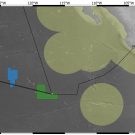
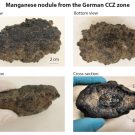
At the bottom of the Ocean, in ~4000m water depth they can be found in high abundances: Manganese nodules. Industry and states are interested in these potato-sized objects as a new metal resource. But before commercial mining will start, the potential ecological impacts need to be investigated. Therefore, the project MiningImpact (funded through JPI Oceans) […]
Let’s talk about jellies!
Ina and Silvia from Syddansk Universitet in Odense, Denmark joined the cruise for the EU 2020 Horizon project GoJelly. One key goal of GoJelly is to improve the understanding of the role of jellyfish in marine ecosystems. Today it’s Ina and Silvia’s turn to tell us a bit about their research routine and experiences on […]
AL521 now posting from the Baltic Sea!
It’s spring time, and like every year for us this means that it is time to head out to sea with research vessel ALKOR to extend the Baltic Sea integrative long-term data series, running now in its 33rd year. The mission: to enhance the understanding of the complex and profound changes that Baltic Sea ecosystems […]
Sharing the caring: head of the NanoSIMS lab Dr. Angela Vogts
What is the nature of your work? I am the head of the NanoSIMS lab at the Leibniz Institute for Baltic Sea Research. The NanoSIMS facility is open to all scientists and thus I am in contact with different working groups of the institute as well with national and international scientists. I supervise a technician […]