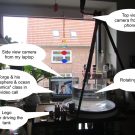
Yesterday we had four rotating in operation simultaneously, running three different experiments. It’s pretty awesome to be able to bridge spin-up times by just observing what the teams on the neighboring tables are up to, also it’s nice to get a variety of experiments all happening at the same time. Very entertaining and educational indeed! […]
Welcome to the family!
In addition to our four DIYnamics-inspired rotating tanks, we now have a highly professional rotating table with SO MANY options! And also so much unboxing and constructing and trouble-shooting to do before it works. But we finished the first successful test: wanna see some rotating coffee in which milk is added? Then check this out!
So schreiben Sie den perfekten wissenschaftlichen Blogbeitrag
Auch wenn es zunächst nicht so scheinen mag: Einen Beitrag für einen wissenschaftlichen Blog zu schreiben ist nicht schwer. Ein paar Tipps und Tricks können helfen, dass er auch gelesen wird. Die Wissenschaftsjournalistin Dr. Yasmin Appelhans war heute im Kurs zu Gast. Hier schreibt sie über verständliches Formulieren, Kernbotschaften und die persönliche Ansprache in Blogs. […]
Last but not least in 2019: The blog from Team South Africa
“Wyneberg, Wyneberg” – a hooting Minibus taxi is racing past us on the way to the upper campus of the University of Cape Town (UCT), a man hangs half out the front-passengers window, smiling and whistling at us. Us being Matthew and Silja, Team South Africa, in short: Team SA, ready to revive the GAME […]
Throwback Thursday: Clouds in a bottle
A while back, Susann Tegtmeier and Mirjam ran a PerLe teaching innovation project together. Today, we are reposting a blog post about one of the experiments they implemented. This post was first published on Mirjam’s blog. No one likes clouds when they bring rain, but what if you could make your own? Making a cloud […]
#MOSESeddyhunt – noch mehr autonome Helfer / even more autonomous assistants
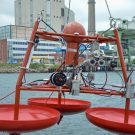
Neulich haben wir hier im Blog die Saildrones vorgestellt, die uns bei der #MOSESeddyhunt unterstützen, unser Messnetz erweitern und die Untersuchung der Ozeanwirbel effektiver machen. Sie sind aber nicht die einzigen autonomen Geräte, die derzeit die Gewässer rund um die Kapverden befahren und durchtauchen, um uns möglichst viele Daten aus den mobilen Ozean-Wirbeln zu liefern. […]
Not just for university teaching: Sharing our experiments with everybody!
Doing experiments like the ones we’ve been doing here is super helpful to let students of ocean and atmosphere sciences find a different way to approach highly theoretical rotating fluid dynamics. But the experiments are pretty and are raising curiosity not only in students, but in most people that see them. To share them with […]
#MOSESeddyhunt: Neues von der Stemme/News from the Stemme
(English below) Hier kommt ein Update von der Stemme-Crew. Diesmal aus unserer neuen “Zentrale” auf Fogo! Gestern sind wir mit den wichtigsten Teilen der Ausrüstung von der Insel Sal nach Fogo umgezogen. Da die Fähre wegen der großen Wellen nicht lief, sind wir alle mit dem Flugzeug geflogen. Leider sind einige unserer Geräte nicht angekommen, […]
Seeking to become a female offshore professional: marine hydrology specialist Greta Kilmonaitė
Meet Greta Kilmonaitė, a young woman who has already chosen her career path and is seeking to become an offshore professional. Currently she’s a last year MSc student in the study programme Marine Hydrology at Klaipeda University and she already works as a marine hydrology specialist in the Marine Research Institute, Klaipeda University. What did […]
#MOSESEDDYHUNT: Der Ozean unter dem Mikroskop / The Ocean under a Microscope
(English below) Es schneit, es schneit, …. Auf den Kap Verden?! Nein, nicht das, was ihr denkt! Die Rede ist von “marine snow”. Also Schnee im Ozean. Das sind herabsinkende Partikel oder Aggregate biogenen Ursprungs, die unter Wasser wie Schneeflocken aussehen und eine wichtige Rolle im Partikelfluss des Ozeans spielen. Diese Aggregate, beispielsweise aus abgestorbenem […]