When you dare say what everybody else is thinking…

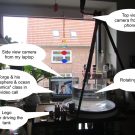
Using “One should really play more!” as title of a presentation in a serious scientific colloquium might seem like a bold move, but the gamble payed off: a large, interested audience including everyone from students to professors enthusiastically dropped ice cubes and food dye in our LEGO-driven rotating tanks and passionately discussed their observations. On […]

12 students, four rotating tables, three experiments and one dog

Yesterday we had four rotating in operation simultaneously, running three different experiments. It’s pretty awesome to be able to bridge spin-up times by just observing what the teams on the neighboring tables are up to, also it’s nice to get a variety of experiments all happening at the same time. Very entertaining and educational indeed! […]

So schreiben Sie den perfekten wissenschaftlichen Blogbeitrag

Auch wenn es zunächst nicht so scheinen mag: Einen Beitrag für einen wissenschaftlichen Blog zu schreiben ist nicht schwer. Ein paar Tipps und Tricks können helfen, dass er auch gelesen wird. Die Wissenschaftsjournalistin Dr. Yasmin Appelhans war heute im Kurs zu Gast. Hier schreibt sie über verständliches Formulieren, Kernbotschaften und die persönliche Ansprache in Blogs. […]

from Game Blog

Last but not least in 2019: The blog from Team South Africa

“Wyneberg, Wyneberg” – a hooting Minibus taxi is racing past us on the way to the upper campus of the University of Cape Town (UCT), a man hangs half out the front-passengers window, smiling and whistling at us. Us being Matthew and Silja, Team South Africa, in short: Team SA, ready to revive the GAME […]

from Cape Verde Blog

#MOSESeddyhunt – noch mehr autonome Helfer / even more autonomous assistants

Waveglider-Bergung während der #MOSESeddyhunt / Waveglider recovery during the #MOSESeddyhunt. Photo: Arne Körtzinger/GEOMAR

Neulich haben wir hier im Blog die Saildrones vorgestellt, die uns bei der #MOSESeddyhunt unterstützen, unser Messnetz erweitern und die Untersuchung der Ozeanwirbel effektiver machen. Sie sind aber nicht die einzigen autonomen Geräte, die derzeit die Gewässer rund um die Kapverden befahren und durchtauchen, um uns möglichst viele Daten aus den mobilen Ozean-Wirbeln zu liefern. […]