from Game Blog

GAME 2020: Researching the effects of plastic debris on the community level

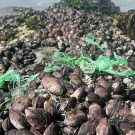
On Monday March 2nd, the preparation course for the new GAME project will start and also in 2020 the programme will focus again on the effects of plastic litter on marine life. However, while previous research in this field has almost exclusively focused on the impact of macro- or micro-sized debris on single organisms, GAME […]

from EUREC4A-MSM89 Blog

Finding Eddy Vol. 2

The last week of our cruise has begun, and the eddy hunt is aiming for an eddy in the East of Trinidad and Tobago, Eddy2. The trick with catching Eddy2 is to first estimate his dimensions by using sea level anomaly maps which give insight on surface eddies that are often overlying deeper eddies, like […]

Ocean Sciences Meeting, San Diego, Monday morning 8 a.m.

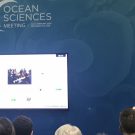
Here we go, a full week of exciting science presentations lies ahead of us. The Ocean Sciences Meeting is a large scientific conference devoted entirely on new discoveries in ocean physics, biology, chemistry, … from hot topics in the tropics to cool stuff in the rapidly changing polar regions. About 5,000 scientists from around the […]

from Baltic Gender Blog

Being the only women in a management circle: IT-Specialist Regine Schlicht

Regine Schlicht is the head of the Mittelstand 4.0 – Competence Center Kiel in Germany. This center combines competences from 6 scientific institutions in Schleswig-Holstein in order to enable small and medium-sized enterprises to digitize. The previous blogpost have mainly been on women working in marine science and technology. Here we widen the scope to […]

from EUREC4A-MSM89 Blog

Chasing clouds

Part 1: Why chase clouds Imagine you would like to have a nice barbeque on Sunday but the weather report seems quite undecided whether it will rain or not. You wonder: “How hard can it be to predict if it rains? It seems like the forecasts are always off!”. As scientists, we face this challenge […]

from EUREC4A-MSM89 Blog

Die Meeresoberfläche im Fokus

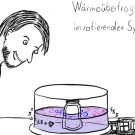
(English version below) Es dreht sich und dreht sich und dreht sich: 24/7 rotiert unser Doppler-Radar nun auf der MARIA S. MERIAN und sammelt Daten. Dabei misst es die Rauigkeit der Meeresoberfläche, aus der Parameter wie Seegang, Strömung und Wind bestimmte werden können. Unser Radar ist ein modifiziertes Navigationsradar (auch marines X-Band-Radar genannt). Herkömmliche nautische […]

Be flexible

The KOSMOS-CUSCO project focuses on the links between upwelling intensity, primary productivity, export and trophic transfer efficiency in a changing climate. They seek to understand the reasons for the out of phase seasonal cycle between nutrient supply and phytoplankton productivity, an unexplained phenomenon unique to the Humboldt upwelling system. In a complementary way, Humboldt Tipping […]

from EUREC4A-MSM89 Blog

Up in the air

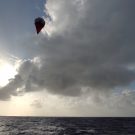
A couple of days ago we started heading north again. We are now in an area where also the research vessel Meteor and the research plane HALO are operating. HALO circles every second day above our heads measuring both with its instruments on board as well as by releasing dropsondes. Those small meteorological devices descend […]

How to study the future of the “most heavily exploited fish in world history”

First of all, you need to know which one that is: it’s the Peruvian Anchovy and it´s caught in such enormous quantities that it´s the biggest single-species fishery in the world. But it’s not used by humans directly, the hand-long fishes are ground to fishmeal and fish oil and are then shipped all over the world […]