Having enjoyed the highly enriching summer school on coastal hazards together with young colleagues from altogether four continents, I have now finally fulfilled my promise : My blog on Humanities and Ocean Research has just been published on oceanblogs.org. On this blog, you will find a number of pages that explain why and in which […]
Die Unter-Wasser-Fahrzeugflotte
ROV-Ecke, das klingt wie Kinder-Ecke: „Der kleine KIEL 6000 möchte jetzt aus dem Kinderparadies abgeholt werden.“ Was im ersten Moment klein klingt, ist es ganz und gar nicht. Denn in der ROV-Ecke lagern – natürlich – ROVs. Und was bitte ist ein ROV? „Remotely Operated Vehicle“, sprich ein kabelferngesteuertes Unterwasser-Fahrzeug. Diese Geräte sind jedoch alles […]
Dezember 2013: GAME in den neuen GEOMAR News
Auch in den neuen GEOMAR News, die regelmäßig über das gesamte Spektrum der Forschung am GEOMAR berichten, findet sich ein Beitrag zu den ersten GAME-Ergebnissen zum Einfluss von Mikroplastikpartikeln auf Meeresorganismen. Der Newsletter kann unter www.geomar.de/service/kommunikation/newsletter heruntergeladen werden.
Welcher Tag ist heute?
Auf dem Forschungsschiff ticken die Uhren durchaus anders. Kaum ist man eine Woche auf See, fragt der ein oder andere schon hin und wieder, welcher Wochentag gerade ist. Dabei gibt es eine ganze Reihe an Anhaltspunkten, die hier weiterhelfen. Zum einen, wie sollte es auch anders sein, das Essen. Reflektiert man, welche Mahlzeiten man zuletzt […]
Dezember 2013: GAME-Vorträge sind sehr gut besucht
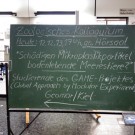
In diesem Jahr präsentierten die GAME-Teilnehmer ihre Ergebnisse an insgesamt fünf Universitäten in Norddeutschland und überall stieß das Thema ‚Auswirkungen von Mikroplastik auf Meeresorganismen auf sehr großes Interesse unter den Studierenden. Oft hatten die Vortragenden 50 und mehr Zuhörer. Damit sind die GAME-Vorträge des Jahres 2013 die bestbesuchtesten in der Geschichte des Programms. Wir freuen […]
Better Understanding of the Behavior of the 2011 Japan Tsunami
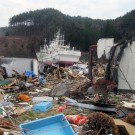
In this new “Earthquake and Tsunami”-Blog, I will talk about my field work in Japan in 2011 as well as my new research on tsunamis and large subduction zone earthquakes. My aim is to better understand what happened during the 2011 Japan tsunami and to explain my recent findings. As a result of my research in Japan, […]
Future Ocean Spatial Planning
“Our research aims at improving the scientific basis necessary for more sustainable development of the global future ocean. These aims include the development of a fully negotiable SDG text and a concept for Future Ocean Spatial Planning (FOSP). Therefore, we will build working groups of experts from inside the research group and including external key […]
Sustainable Coastal Development
“Nothing is static, and neither are the world’s coasts. Constantly shaped by waves and wind, and at a progressive rate by humans, coasts are facing considerable changes – and challenges. A rising demand for coastal resources, resulting alterations and interventions in the coastal zone, natural hazards, climate change and resulting effects have noticeable and often […]
The Sustainability Principle
“Since the classical definition provided by the Brundtland Commission in 1987, the term ‘sustainability’ has become the dominant Leitmotiv for shaping international environmental and developmental relations. Notwithstanding these efforts, there is still no commonly accepted definition of the term and it often remains unclear what sustainability actually means. This holds particularly true in the conservation, […]
Zeitmaschinen für Wissenschaftler
Wie 17 Kilometer auf 920 Quadratmeter passen? Ganz einfach: Im Kernlager des TLZ lagern rund 17 Kilometer Bohrkerne, das heißt Sedimente aus aller Welt, auf etwa 920 Quadratmetern. Seit 1964 werden solche Kerne von Expeditionen mitgebracht, aufbereitet, präpariert, beschriftet und gelagert. Auf Expeditionen sieht das in etwa so aus: Ein 1 bis 18 Meter langes […]