from Cape Verde Blog

POS520 Cape Verde Cruise / POS520 Fahrt um die Kapverden

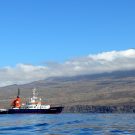
POSEIDON vor der Kapverden Insel Fogo / RV POSEIDON off the Cape Verdean island of Fogo. Photo Karen Hissmann / JAGO-Team

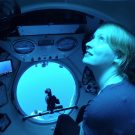
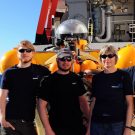
(Deutsche Version unten) Between the 14 Feb and  1 March 2018 expedition POS520 with RV POSEIDON and the submersible JAGO takes place off the coast of the cape verde island Santo Antão. The chief scientist, the JAGO team and participants of the cruise write here as guest writers. Today Henk-Jan Hoving, GEOMAR, Deep Sea Biologist, […]

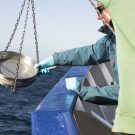
Sifting water in front of the Mauretanian Coast / Wasser sieben vor der Küste Mauretaniens

The week is starting onboard POSEIDON. Slowly the sun rises, immersing the sea for a brief moment in orange-red light. Eight o’clock. The work on the deck and in the laboratories is going on. The day begins with the measurement of the microstructure sonde, followed by the CTD. In addition to this station work, so-called […]

The drifter II and the microstructure / Der Drifter II und die Mikrostruktur

A focus of this trip is on the drifter, which tracks the course of an upwelled water patch of ​​deep water. After we deployed the drifter on January 27, we followed it for several days. We also surveyed the area around the drifter by doing east-west and north-south sections, always returning to the drifter. On […]

What`s a CTD? / Was ist eigentliche eine CTD?

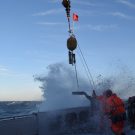
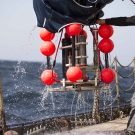
Three times a day, water samples are taken on the R/V POSEIDON using the CTD rosette. CTD stands for conductivity, temperature, and depth, which is determined by measuring the pressure. CTD sampling provides a vertical profile of the water and brings water from different depths to the surface. The CTD rosette on board consists of […]

Reaching the research area – first test CTD

In the early morning of the 23th of January 2018 the R/V POEIDON left Las Palmas and sailed in the following two days to the coast of Mauritania. During the transit the scientists set up their labs, took initial test measurements and checked the functionality of all their equipment for the upcoming research. Using satellite […]