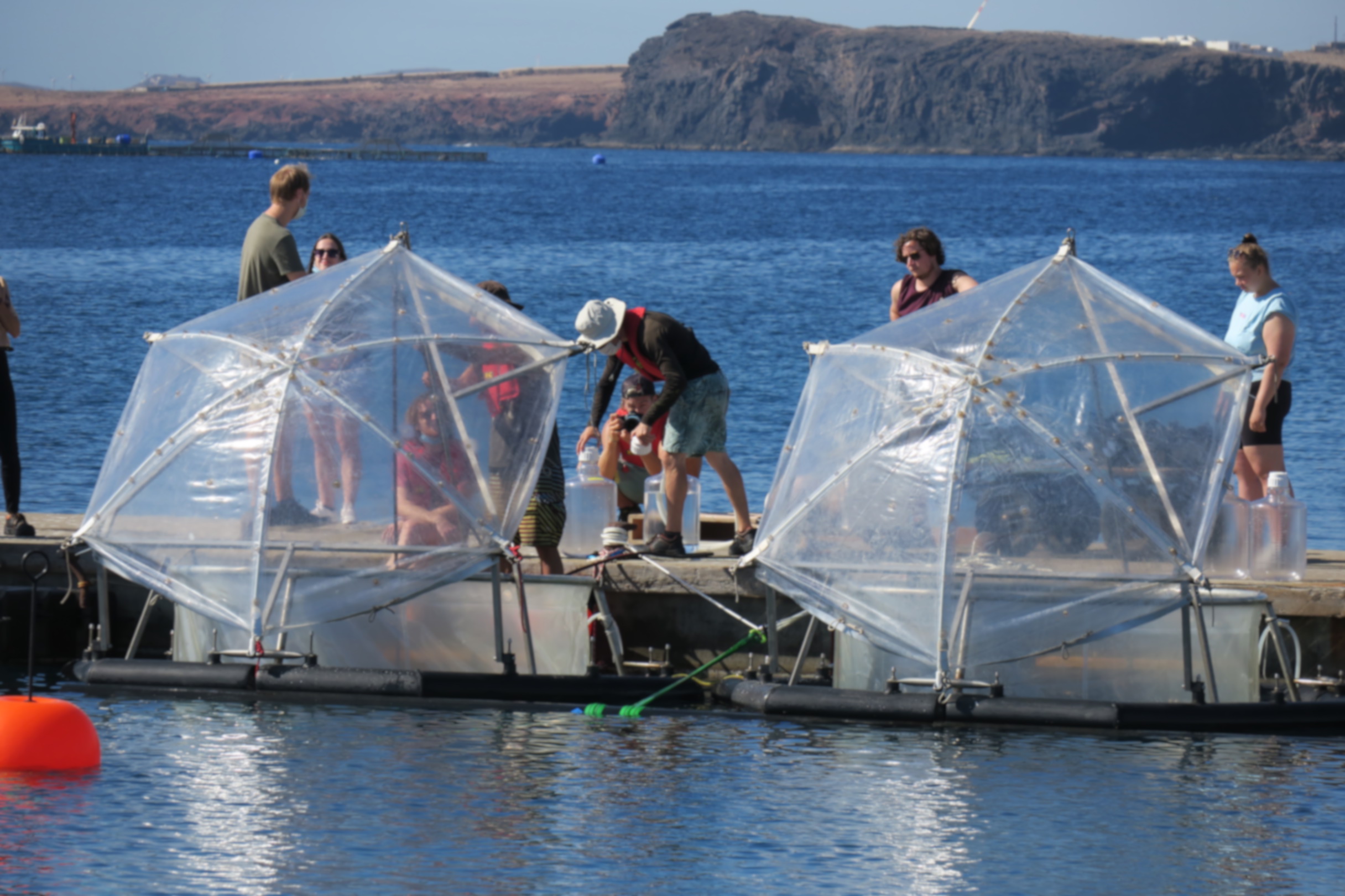
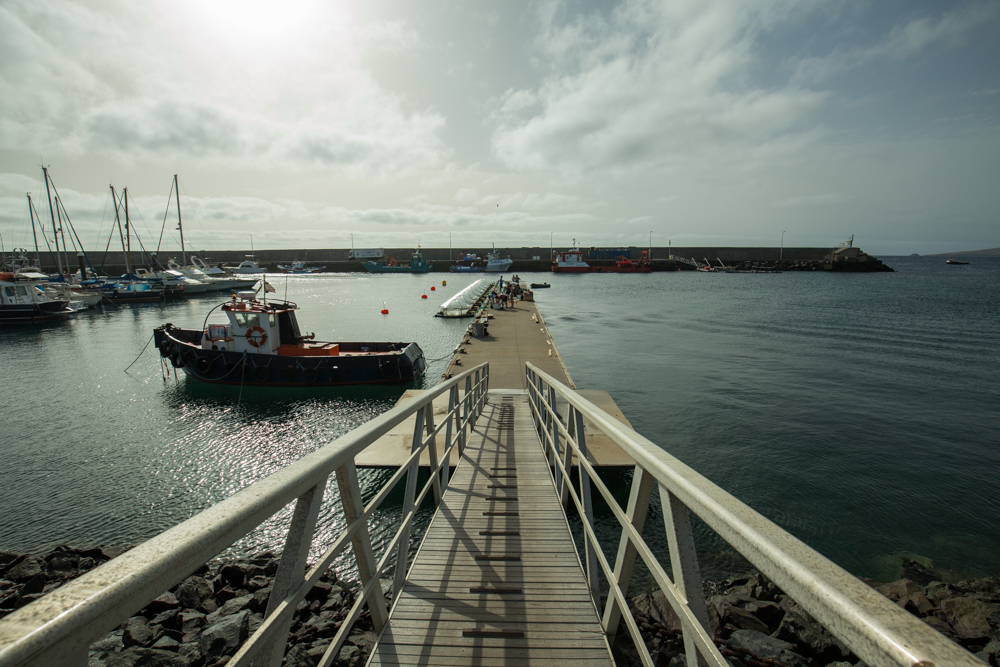
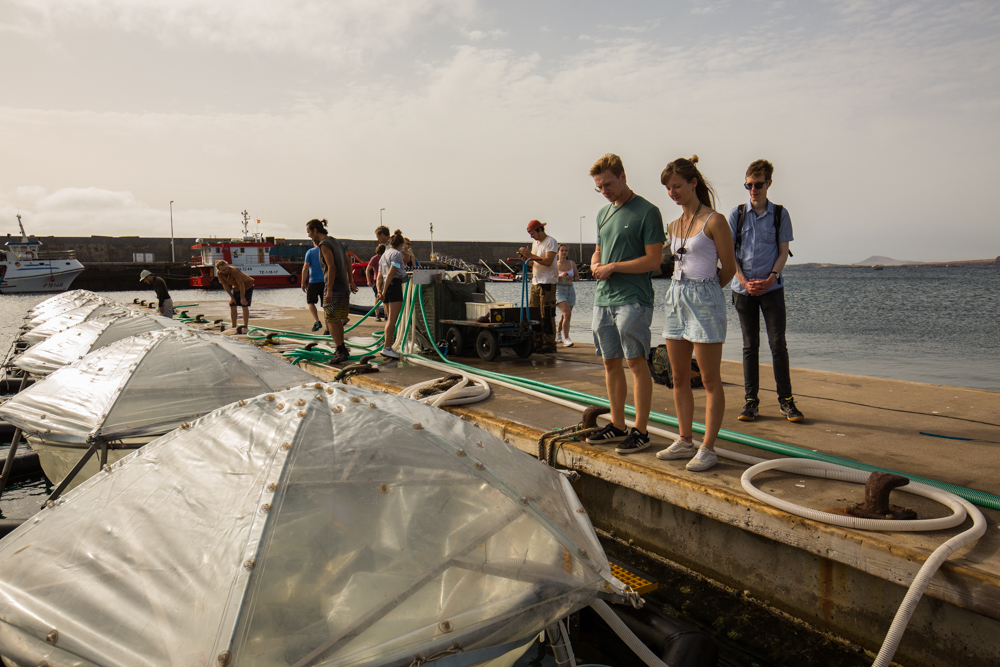
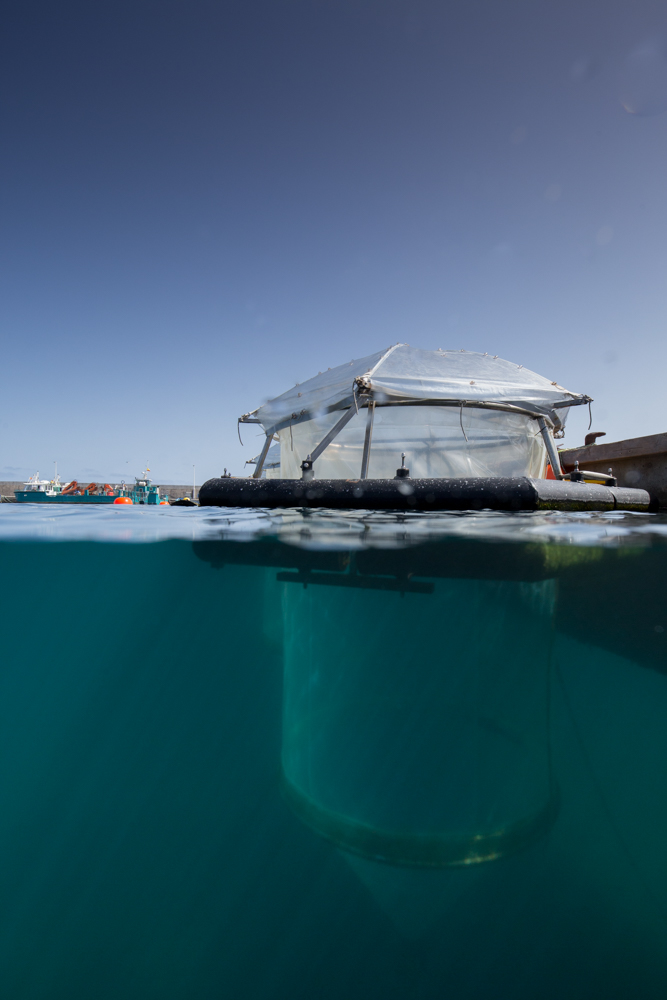
After three packed days of sampling today the treatment of the mesocosms was done. Treatment means the change of the water alkalinity within the mesocosms. In the end, each of the mesocosms has a different level of alkalinity with the highest level double the natural concentration. This is a world premiere for ocean alkalinity enhancement […]
Starting a mesocosm experiment on ocean alkalinity enhancement
A mesocosm, in our case, is a huge translucent plastic bag anchored in the sea, with the only opening being well above sea level. In these bags, we can simulate, in this experiment, ocean alkalinity enhancement (OAE) and study its efficiency and possible impacts it would have on a plankton community under natural conditions; but […]
It’s time to clap!
The mesocosms are filled! The boat PLOCAN uno set anchor outside the harbour of Taliarte. A long tube connects the boat to the mesocosms. Via this tube, sea water gets pumped by a peristaltic pump on the boat to the pier. Here, it is split equally to the nine mesocosms. This year a new equipment was developed […]
Ready to start!
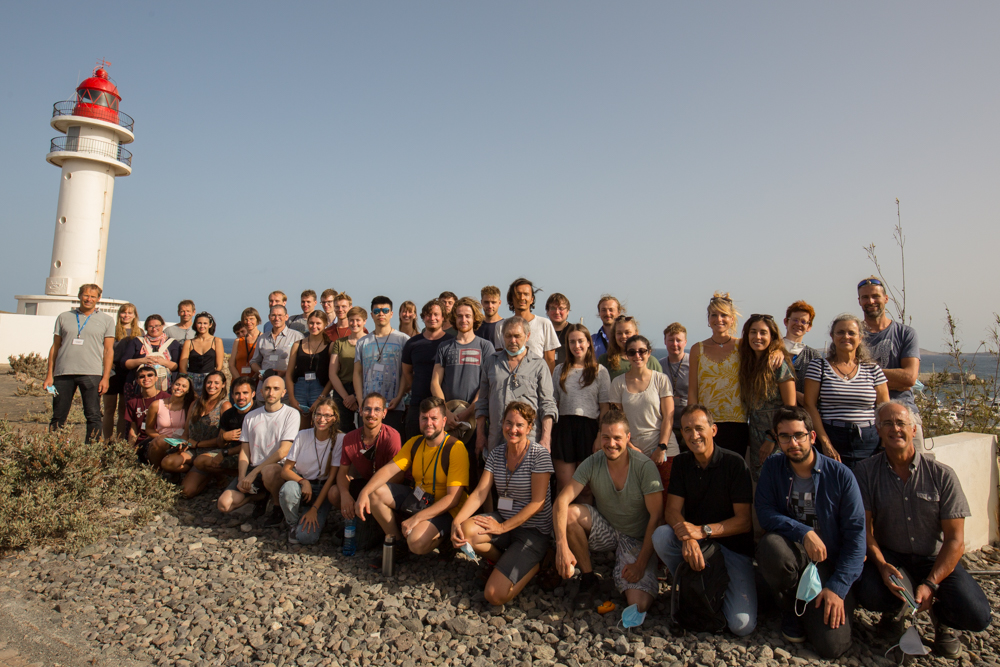
After many months of preparation, uncountable hours of organization, and successfully mastered challenges, finally all researchers and technicians have arrived on the island. During the past weeks, many helpers set up the laboratories and the mesocosms at the pier. Boxes full of equipment from petri dishes to flow cytometers were carried around and unpacked, lots […]
Diving at the mesocosms #1: Jochen & Heavy metal
A KOSMOS study is not meaningful without brain-racking scientists, and not feasible without focused and skilled technicians, but some work can only be done by brave scientific divers. Okay, it’s not super brave to jump into 24°C crystal-clear water surrounded by a bouquet of colorful fish, crabs and nudibranchs – but it´s still hard work […]
Auf der Heimreise
Wir segeln nun über eine freundliche Nordsee zurück, spiegelglatt unter der warmen Sommersonne. Anna hatte ihren frühen Morgenkaffee unter einem rosa Sonnenaufgang, mit Delphinen, die um das Schiff herum sprangen. Die Arbeit ist größtenteils erledigt. Die Mannschaft reinigt das Schiff von den letzten Spuren des Nordseeschlamms. Die Wissenschaftlerinnen und Wissenschaftler sind nun damit beschäftigt, letzte […]
Probenahme von Gasen aus Meerwasser
Die POSEIDON-Expedition 527 ist bereits unser zweiter Besuch am Goldeneye-Feld, um die Umweltbedingungen in diesem Gebiet zu untersuchen. Im Gegensatz zum vergangenen Jahr war das Wetter dieses Mal auf unserer Seite und wir konnten fast dreimal mehr Proben sammeln als 2017. Wir verwendeten einen Kranzwasserschöpfer mit CTD-Sensor und 12 Standard-Niskin-Flaschen, um Proben für gelöste Gase […]
Ein Schwarm von Sensoren!
Eines der Ziele dieser Expedition ist es, neue Sensortechnologien des National Oceanography Centre (NOC) in Southampton zu testen. Wir haben 13 autonome chemische Sensoren mitgebracht – die größte Zahl dieser Geräte, die wir bisher gleichzeitig eingesetzt haben! – und setzen sie auf verschiedenen Plattformen ein. Die Sensoren führen chemische Analysen, die normalerweise in einem Chemielabor […]
Expedition POS527 ist unterwegs
Die Expedition POS527 mit dem Forschungsschiff POSEIDON zur Goldeneye Region in der Nordsee ist ein wichtiger Bestandteil des STEMM-CCS Projektes. Ausrüstung und Abreise Startpunkt für die Expedition war am 14. August 2018 in Kiel. Die Teilnehmerinnen und Teilnehmer reisten vom Plymouth Marine Laboratory (UK), vom National Oceanography Centre Southampton (UK), vom MPI Marine Microbiology (Bremen), […]