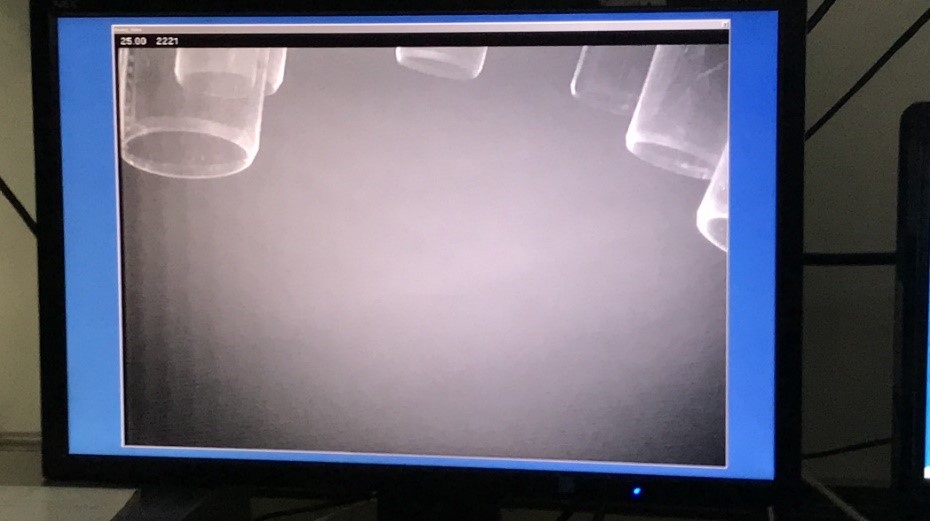
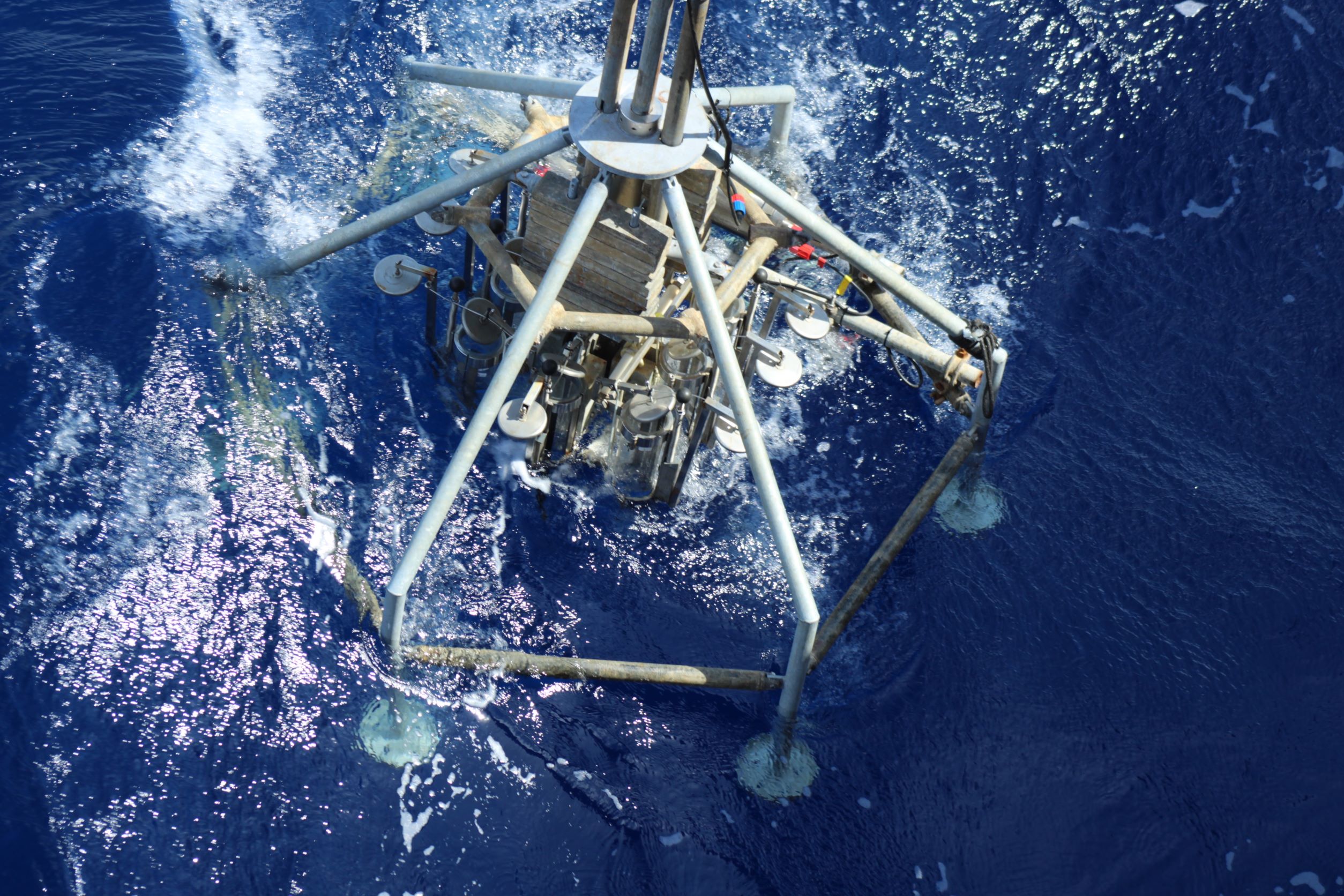
“How to make a group of scientists very happy and super excited?” “Oh smoke!” On the 5th working day, we were at the location near Rainbow hydrothermal vent. From the camera attached to the multicorer, we saw very strong plume and smoke at about 2000 m depth. And this, charged a whole room of scientists […]
M176/2 Time-series study of biological N2 fixation in the North Atlantic
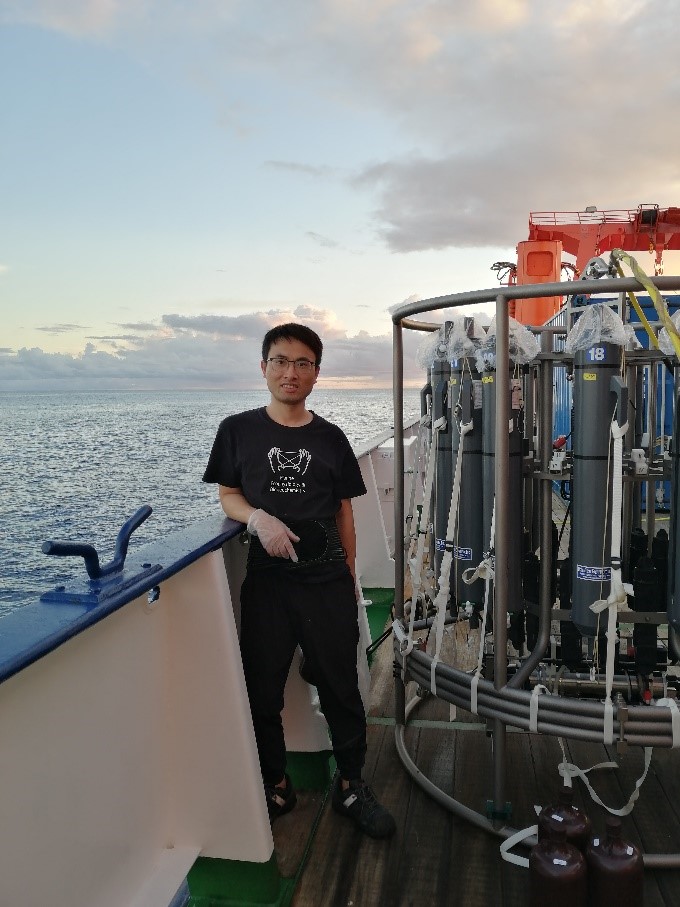
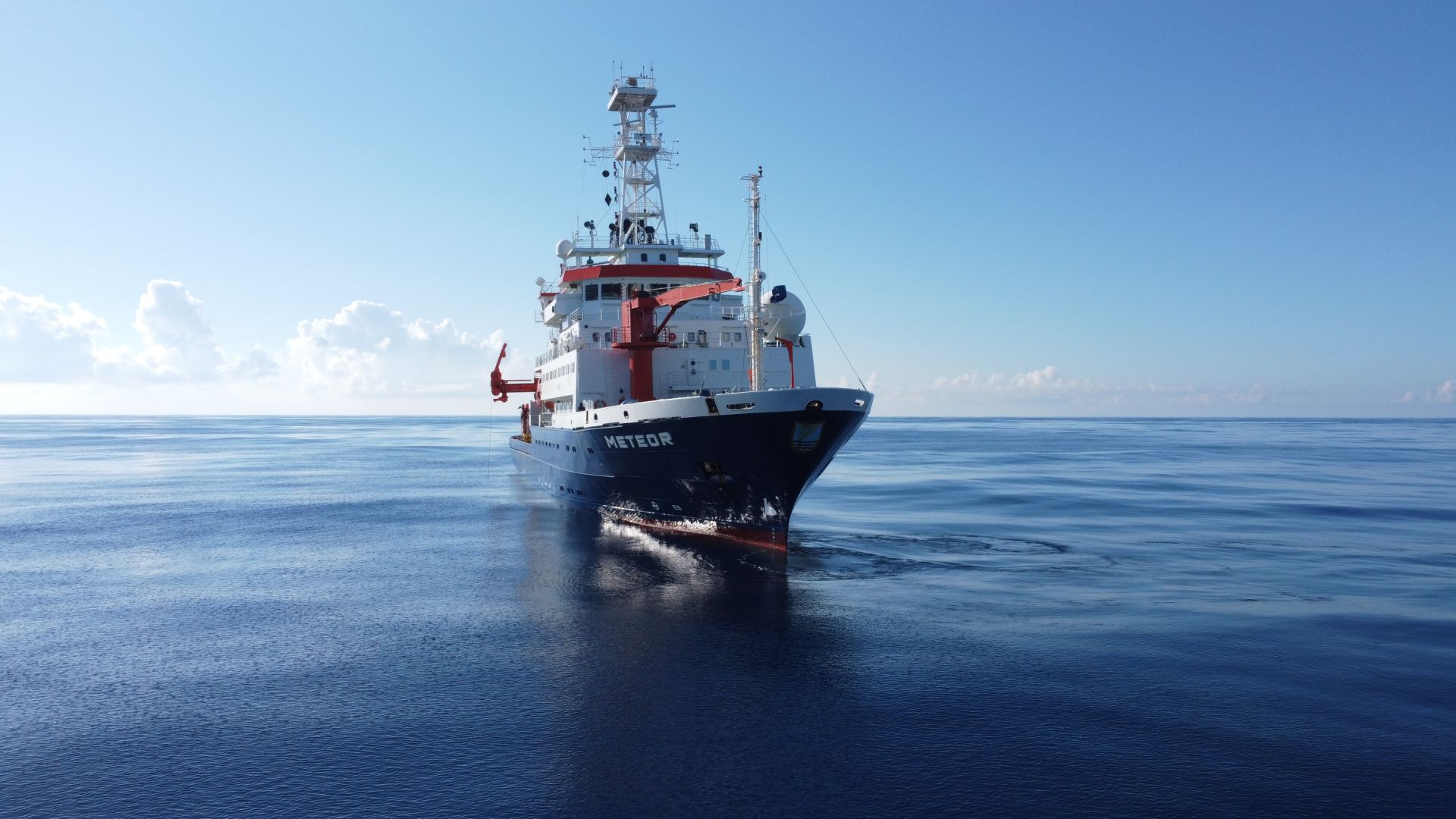
It is a great honor to join the scientific cruise M176/2, a part of the International GEOTRACES Program as a process study. The aim of this cruise is to conduct a detailed geochemical study of the hydrothermal plume at deep (~2500m) close to the sea floor at the Rainbow Vent in the North Atlantic. But […]
M176/2 Bathymetry at the Rainbow Plume
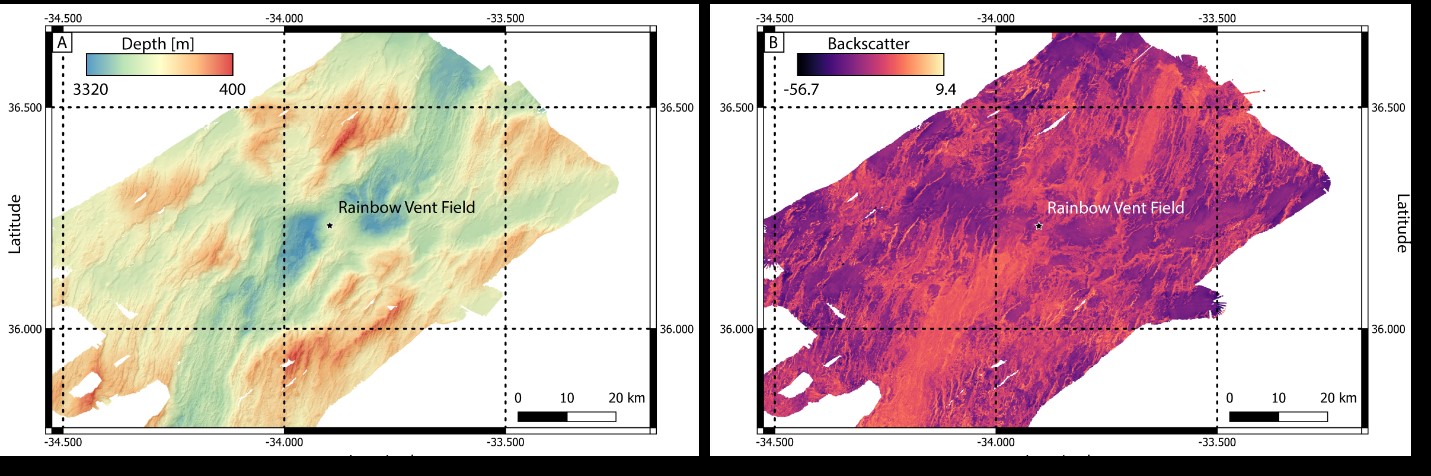
Hello, my name is Chris Galley, and I’m a geophysics PhD student from Canada assisting with the collection and processing of the ship’s acoustic-based imaging data, and mapping. These acoustic methods all measure some feature of the water column, seafloor, or sub-seafloor by releasing pressure waves (sound pings) and then studying the waves upon their […]
M176/2 What controls iron availability to marine phytoplankton: Phycosphere or bulk seawater?
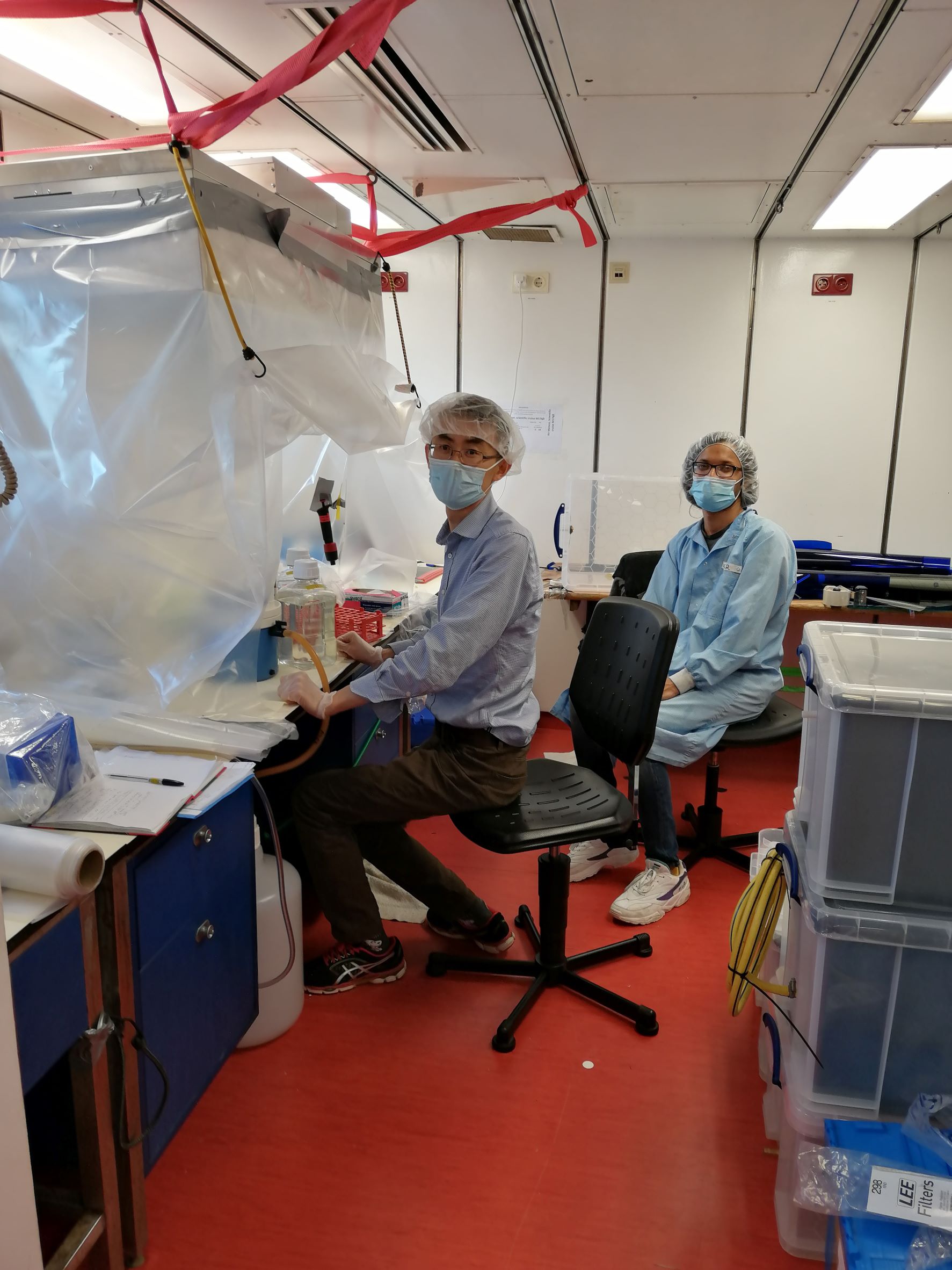
Anthropogenic greenhouse gas emissions such as carbon dioxide (CO2) are causing climate change, global warming, and ocean acidification. Microscopic plants called phytoplankton, living in the surface oceans, sequester 50% of global CO2 and supply >50% of new nitrogen used for primary production. Other than light and major nutrients, phytoplankton growth is strongly influenced by availability […]
M176/2 Tiny seafloor inhabitants close to the rainbow vent
It is the fourth day since we arrived at our research location in the middle of the Atlantic: The Rainbow Plume. The Multicorer, or short “MUC” just arrived its final destination at 2300m water depth. Now the wire that holds the MUC tightens again and the winch slowly starts pulling the device back on board. […]
M176/2 Hydrothermal Plume Geochemical study: RainbowPlume
The cruise M176/2 is part of the International GEOTRACES Programme as a process study. The overall aim of cruise M176/2 is to conduct a detailed geochemical sampling of the hydrothermal plume at the Rainbow vent field located at 36°13.80 N, 33°54.14 W on the Mid-Atlantic Ridge (MAR). The deep ocean work will be complimented by […]
Im Arbeitsgebiet vor Nova Scotia
english version below Seit sechs Tagen sind wir nun in unserem Arbeitsgebiet vor Nova Scotia. Daher arbeiten die Teams der Geologie und Ozeanographie nun täglich an Deck. Über Nacht fahren die Hydroakustiker Profile ab, worauf am Morgen danach die Parasound-Daten gesichtet werden. Anhand der Sedimentecholotprofile entscheidet dann Fahrtleiter Ralph in Absprache mit unseren Teamleiter:innen Felix […]
Quer über den Atlantik mit der Maria S. Merian
(english version below) Am 12. Juni, nach 10 Tagen Hotelquarantäne und zwei negativen PCR-Tests, hieß es für uns: „Leinen los“! Mit dem Forschungsschiff Maria S. Merian starteten wir unsere Reise in Emden, Richtung Nova Scotia. Unsere Forschungsexpedition Novamar MSM101 steht unter der wissenschaftlichen Leitung von Prof. Dr. Ralph Schneider. An Bord leitet er das Team […]
AL553 and AL556 – the Baltic integrative time series continues after a one-year Corona gap!
After a one year, Corona-induced break, our integrative time series to assess long-term changes in Baltic Sea pelagic ecosystems finally continues, now running in its 35th year. It feels great to be back at sea after a two-year break and long preparations, overshadowed by the question whether we could really embark this time. In March […]
#FjordExport – Eine Forschungsexpedition trotz(t) Corona
“Nicht nur der wissenschaftliche Erfolg dieser Reise rechtfertigt den Aufwand, auch die ansteckende Begeisterung und die Kooperation sind nach vielen doch recht einsamen Monaten im Home Office eine große Motivation.” Am 2. März 2021 verließ das Forschungsschiff Heincke Bremerhaven mit Ziel Norwegen. Vor dem Start einer Expedition liegen viele Monate Arbeit und Vorbereitung, damit alle […]