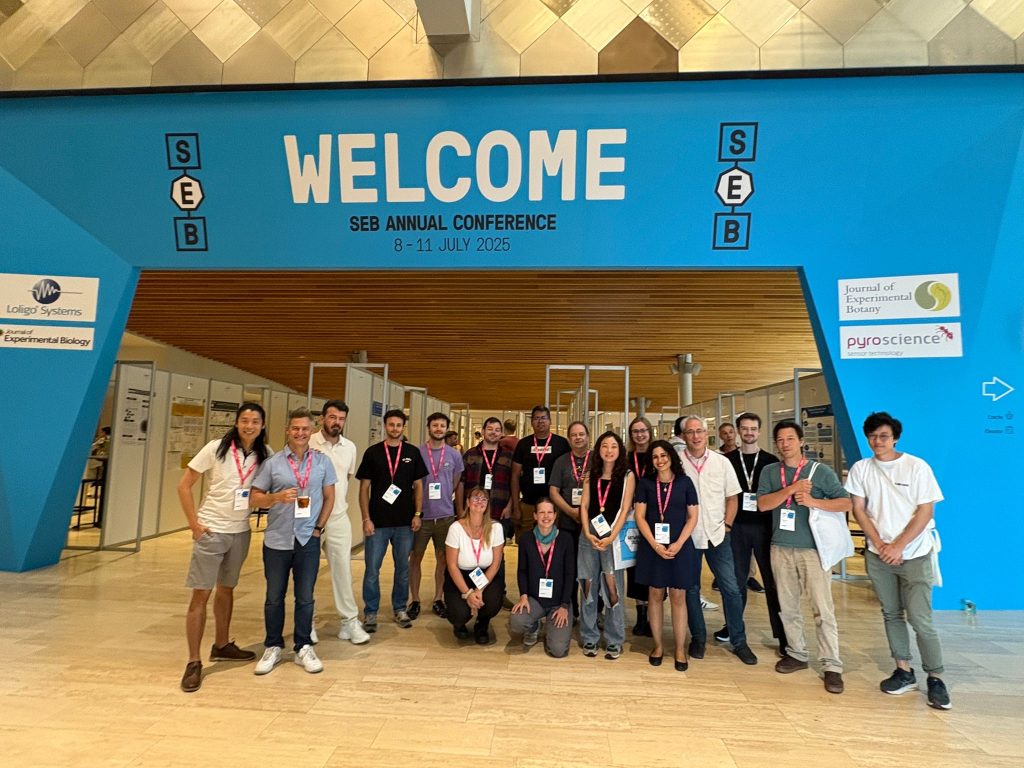
SEB Conference 2025, Antwerp
My name is Christine Blurton, and I’m a PhD researcher at the Institute of Zoology at Christian-Albrechts-Universität zu Kiel, Germany. I am working in the field of Marine Biology, focusing on how climate-related stressors affect the early developmental stages of marine invertebrates. In my research, I focus on the combined effects of marine heatwaves and ocean acidification on the physiology and development of marine larvae. The alteration of the energy metabolism in larvae is an important focus of my work.
Through the FYORD travel grant, I attended the SEB Conference 2025 in Antwerp, Belgium. The international scientific conference was hosted by the Society for Experimental Biology (SEB). The four-day event brought together several hundred researchers across disciplines such as plant biology, animal biology, and cell science.
The conference included plenary lectures, themed sessions with oral presentations, poster presentations, and networking activities, offering a rich environment for knowledge exchange and collaboration.
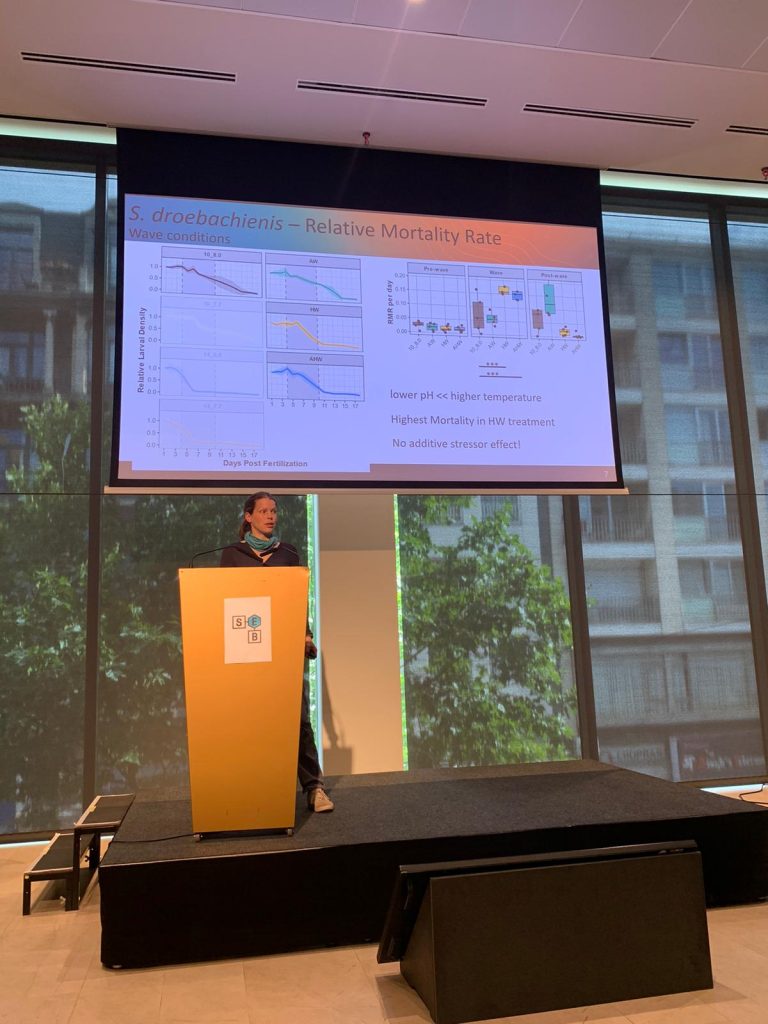
I held an oral presentation during the “Animal Biology” sessions titled: “Double Trouble: The Combined Impact of Heatwaves and Ocean Acidification on Marine Larvae.” In my talk, I presented experimental results on how elevated temperature and reduced pH influence larval development, stress physiology, and feeding dynamics in green sea urchin larvae. The presentation led to interesting discussions and connections with fellow researchers working on similar experiments.
The SEB conference was a great opportunity to meet other researchers, to have inspiring conversations and take some new ideas back to my own work. The SEB conference is very interesting because of the high variations of disciplines presented there. I gained some new ideas by listening to talks that are not situated in my research field, but I was able to transfer some of the ideas to my own work. The conversations at the conference are also always very valuable and supportive for early-career researchers. Presenting my research to a broader audience and receiving feedback was very valuable for my own professional development. I would highly recommend the SEB conference to other Early Career researchers, and I appreciate the possibility of visiting such an event with the support of the FYORD travel grant.
Christine
Virtual Geoscience Conference – Lausanne, Switzerland
In September, I attended the 6th Virtual Geoscience Conference (VGC 2025) at the University of Lausanne in Switzerland. As a postdoctoral researcher at Kiel University’s Institute of Geosciences and the Center for Ocean and Society (CeOS), I work on developing immersive, dynamic virtual environments from real-world data. Within the DAM mission MULTI-MAREX, I develop how these virtual environments can facilitate interaction and knowledge transfer between stakeholders in marine geoscience for extreme events such as tsunamis, landslides and volcanic eruptions.
The VGC 2025 provided an excellent platform for researchers working in the field of digital geosciences, including remote sensing, 3D modelling and virtual reality. With only around 100 participants from across the globe, the conference offered a uniquely collaborative atmosphere. At the four-day event (9–12 September 2025), participants exchanged ideas on a wide range of topics, including laser scanning, UAV-based mapping, AI-driven analysis of spatial data, and VR/AR applications in earth science research and education.
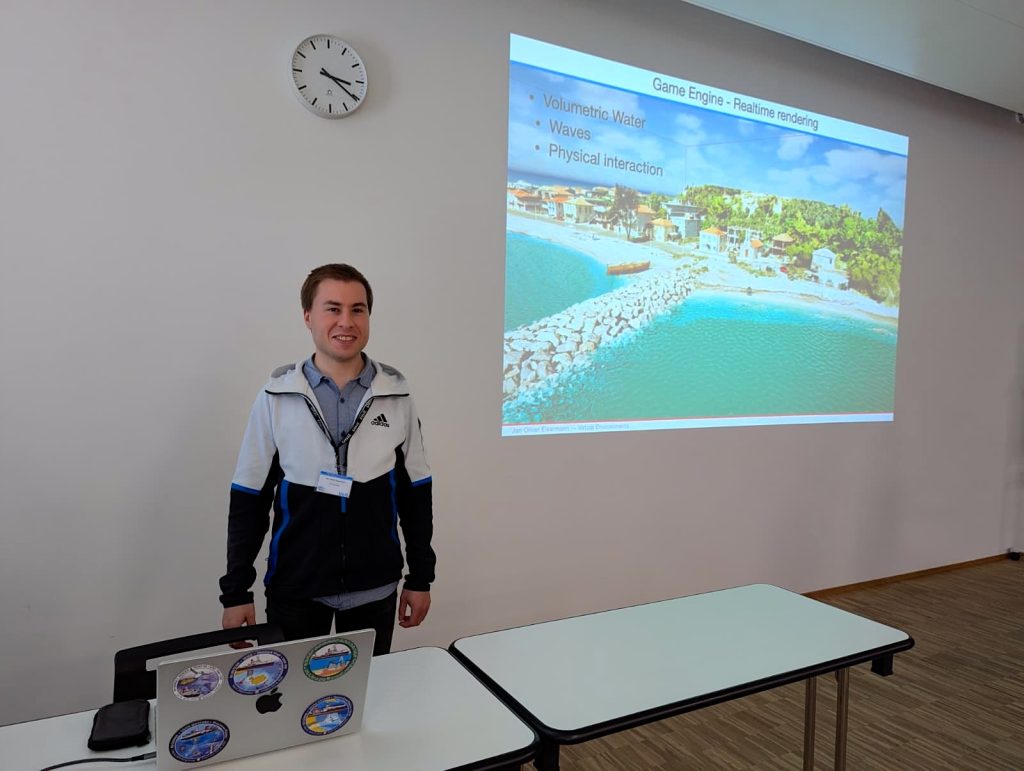
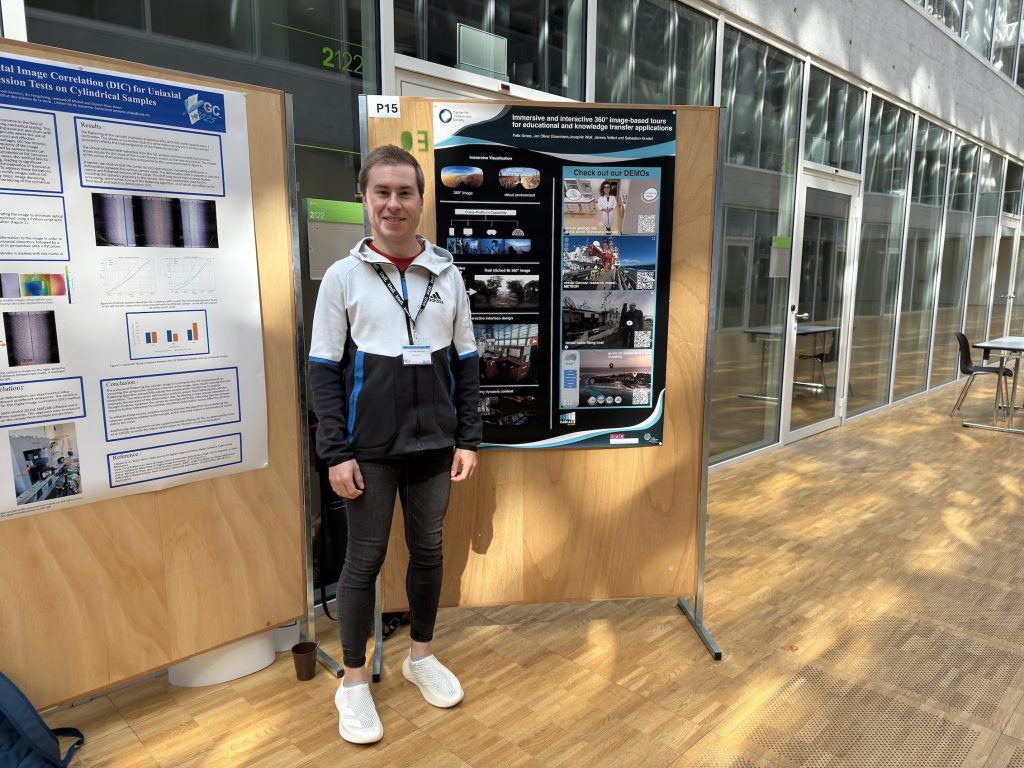
During the conference, I had the pleasure of presenting two contributions. The first was a poster from our lab about immersive and interactive 360° image-based virtual tours. I also gave an oral presentation on my ongoing work within the MULTI-MAREX mission, showcasing the ongoing development of the virtual environment of Santorini for science and stakeholder engagement. Both were very well received, sparking valuable discussions and feedback. One particularly inspiring exchange was with a pioneer of 3D photogrammetric reconstruction, who helped develop the algorithms we now use routinely.
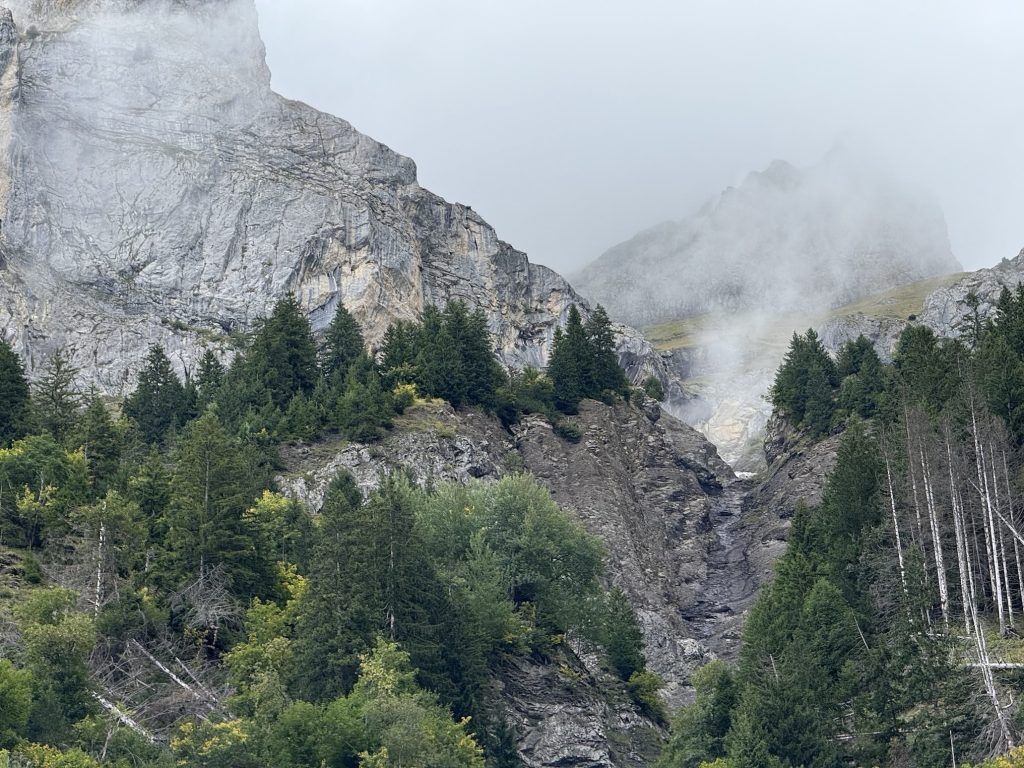
The conference concluded with a field trip to Les Diablerets in the Swiss Alps, where we explored the practical application of risk management using spatial data. Discussing virtual hazard simulations against the backdrop of the alpine landscape was an impressive demonstration of how digital tools can bridge the gap between fieldwork and modelling.
Overall, attending VGC 2025 was a highly rewarding experience. The small size of the conference encouraged constructive dialogue, and I found it easy to connect with colleagues from a variety of disciplines who shared a common interest. I would particularly recommend such events to early-career researchers, as they provide ample opportunities for discussion, feedback and collaboration. Despite the cost of travelling to Switzerland, it was well worth it.
VGC 2025 deepened my understanding of current advances in digital geoscience and strengthened my international professional network. It was a truly inspiring event, and I am grateful for the opportunity to have participated and contributed.
Oliver