The Annual Conference of the Society for Experimental Biology, Antwerp
I am a marine physiologist using sea urchin larvae as a model to investigate energy regulation processes in marine invertebrates. I work at the Zoological Institute, Kiel University, as a postdoctoral research fellow funded by KiTE program.
This summer, I was supported by a FYORD Travel Grant to attend the Annual Conference of the Society for Experimental Biology (SEB) in Antwerp. The SEB conference, known for its interdisciplinary approach and inclusive representation of diverse organismal systems, provides a unique platform for exchanging ideas with researchers who address similar biological questions using different models and methodologies. This year’s meeting included several sessions on animal energy use and physiological responses and acclimation to changing environments.
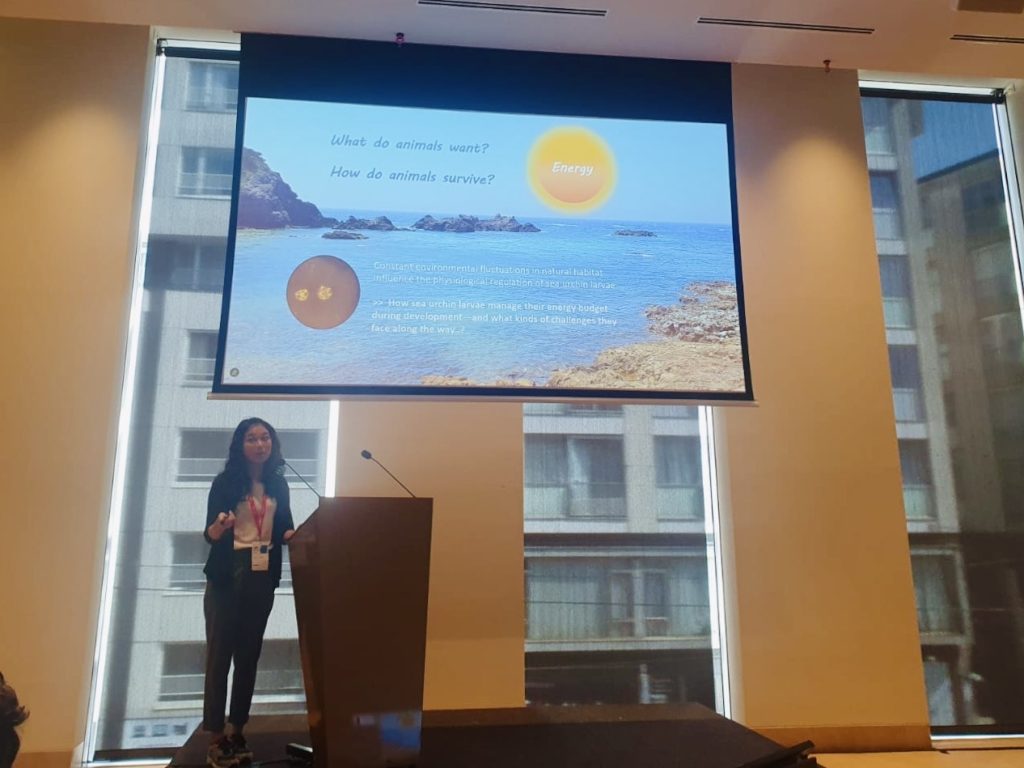
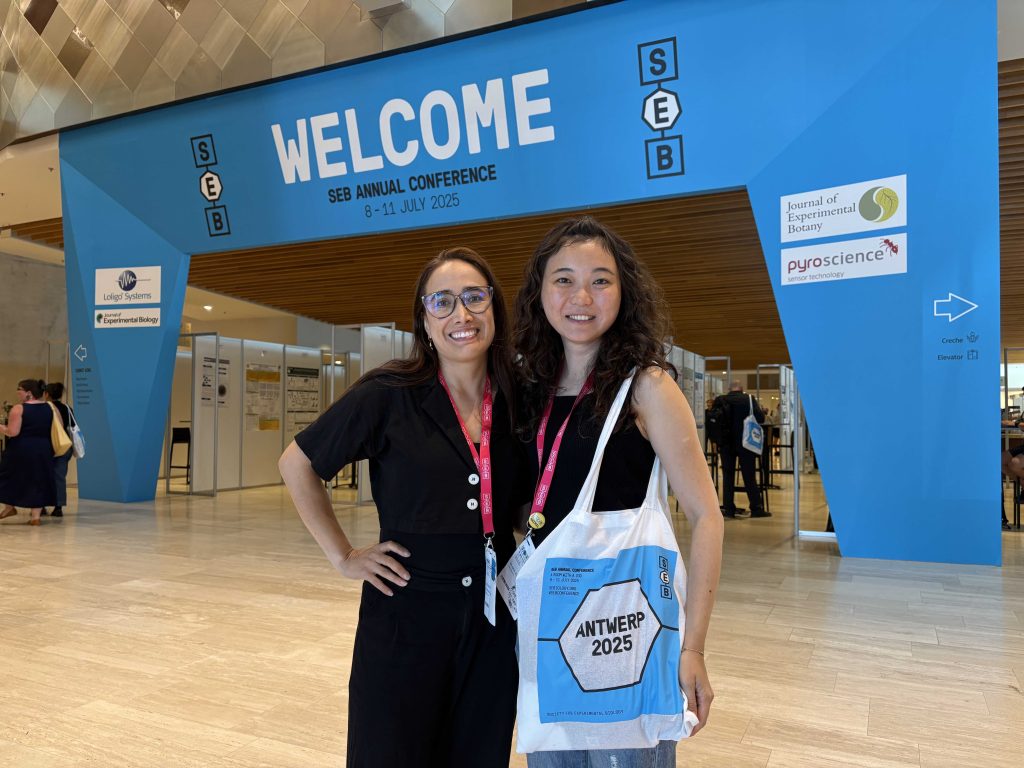
I presented my study, titled “Unravelling the Energy Physiology of Sea Urchin Larvae in Response to Environmental Change,” which demonstrated how sea urchin larvae maintain energy balance in response to ocean acidification have participated in the SEB annual conference almost every year. It is not only a chance to reconnect with old colleagues but also to meet new friends, thanks to the diversity of topics and disciplines represented. To communicate with a broader scientific community working on similar physiological processes across diverse animal models, the best thing is a conference. Excitingly, I met potential collaborators this year, and we are planning to start a joint project next year. It is truly an excellent venue for networking, and I plan to continue attending this conference in the future whenever possible.
Min-Chen
Isaac Rossetto at the 2025 Exeter Seabass Workshop
Isaac Rossetto is a postdoctoral scientist at the GEOMAR Helmholtz Centre for Ocean Research in Kiel who investigates Atlantic cod red blood cells at the Harter lab. The overarching objective of his work is to investigate the physiological adaptations of cod to a shifting climate. Isaac was recently funded by FYORD to attend the 2-week 2025 Exeter Seabass Workshop in the UK. During the workshop, Isaac and his colleagues collected blood samples from seabass which had been acclimated to varying abiotic conditions (CO2, O2, pH, temperature) within climate-controlled aquaria. This was an invaluable opportunity to simulate how fish physiology might adapt – or struggle – under anthropogenically-induced climate change.
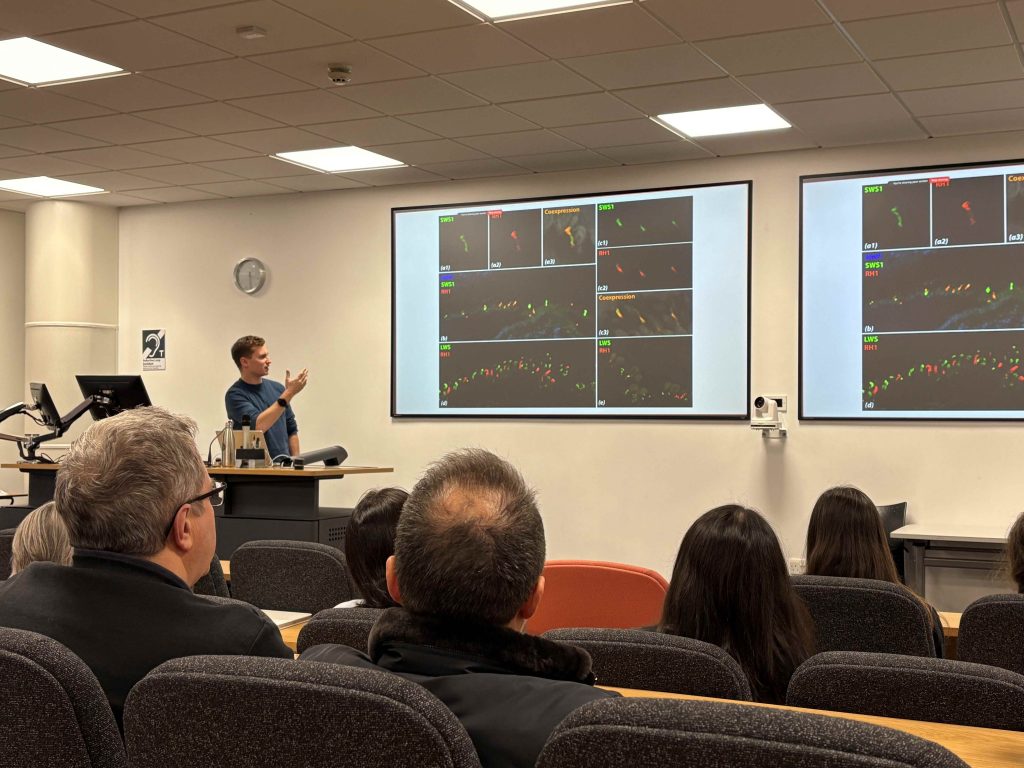
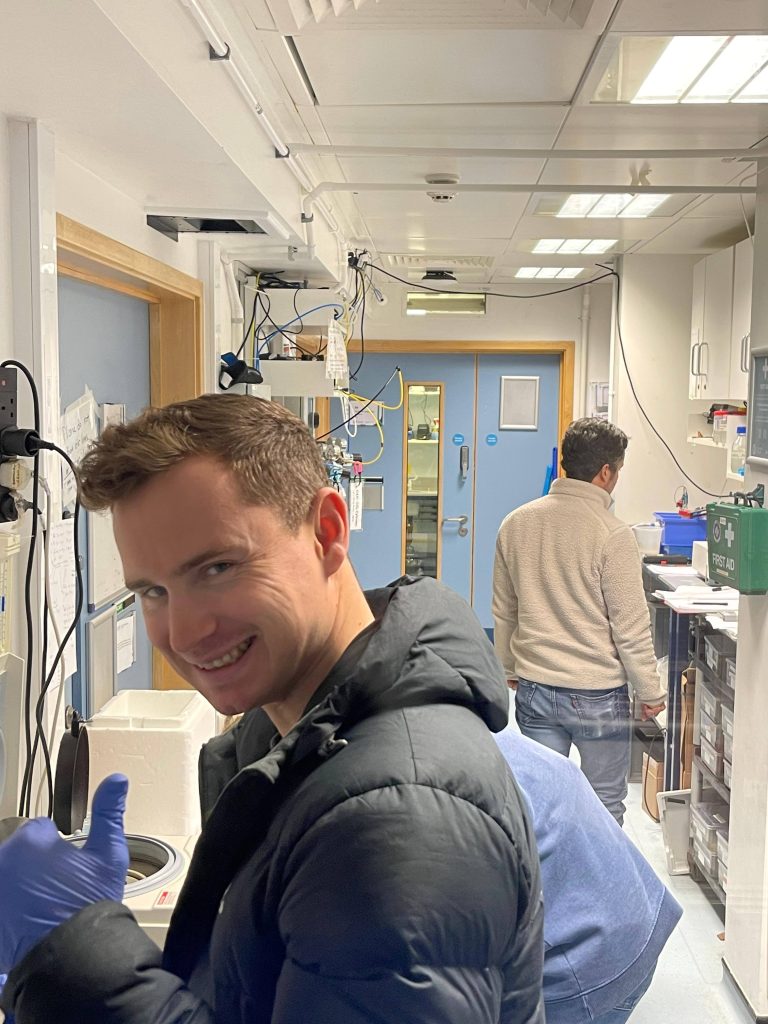
15 other researchers also attended the workshop to study various characteristics of the acclimated seabass, which incidentally created an excellent opportunity for collaboration and networking. At the conclusion of the workshop, a mini-symposium was held in which all visiting scientists presented their research to the Department of Experimental Biology at The University of Exeter. Isaac presented a talk entitled “Oxygen and Acid-Base Sensing/Signalling in Fish Red Blood Cells”, which highlighted his general research background and current project directions. The event was a huge success; Isaac and his colleagues were able to collect a plethora of invaluable research samples while jumpstarting numerous professional collaborations with the other visiting scientists.
Isaac
International Ocean Color Science Meeting – Darmstadt, Germany
Satellite remote sensing offers unique opportunities to monitor Earth and its components. The oceans, in particular, play a crucial role in the Earth system. Monitoring them is essential for understanding marine ecosystems, the global carbon budget, biogeochemical cycles, and environmental change. In remote sensing, this field is referred to as ocean color. Every two years, ocean color scientists from around the world gather at the International Ocean Color Science (IOCS) meeting to share knowledge and discuss state-of-the-art research. This year’s IOCS meeting took place in Darmstadt, Germany, from 1-4 December, and welcomed more than 300 participants – a new record for an IOCS meeting.
For me, Victor Lion, a PhD student in the Earth Observation and Modelling working group at the Department of Geography at Kiel University, the IOCS meeting was an excellent opportunity to present my PhD research. My research focuses on adjacency effects in optical remote sensing over aquatic high-contrast environments. Adjacency effects are optical distortions caused by photons scattered from surrounding areas into the sensor’s field of view. These effects blend spectral signatures, degrade satellite image fidelity, and cause significant uncertainties in water quality products such as chlorophyll-a estimates near coastlines. My colleagues and I have recently published a review article on the emergence, implications, and corrections of adjacency effects (please see here). At the IOCS meeting in Darmstadt, I presented this work as a poster and discussed it with the ocean color community.
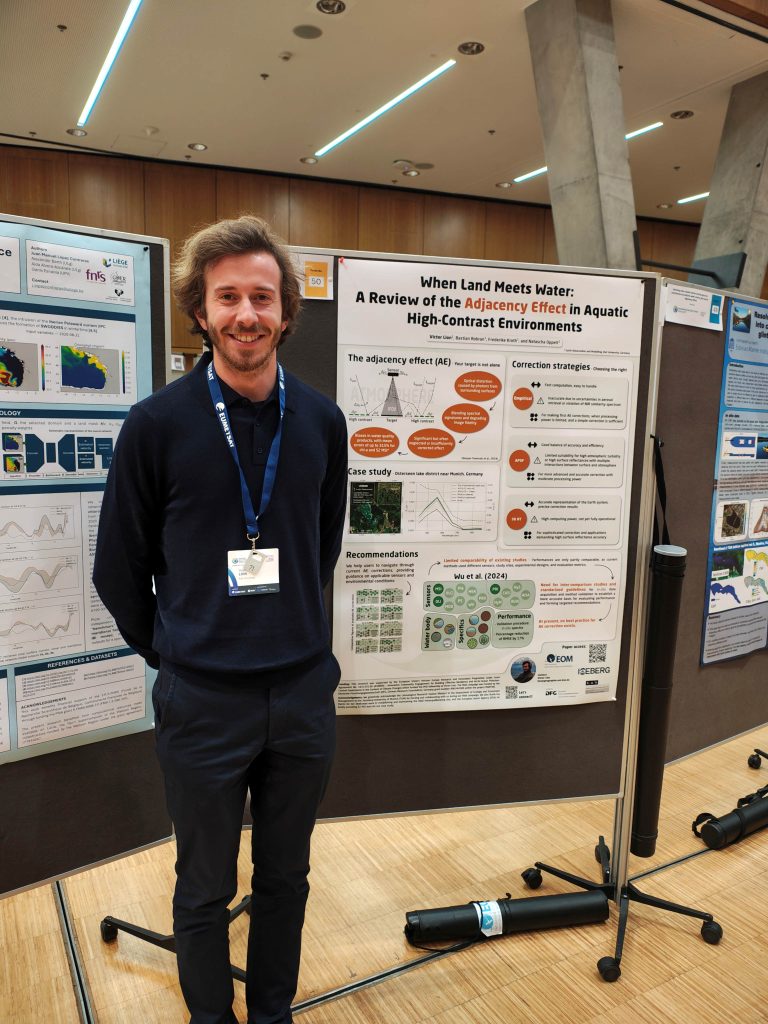
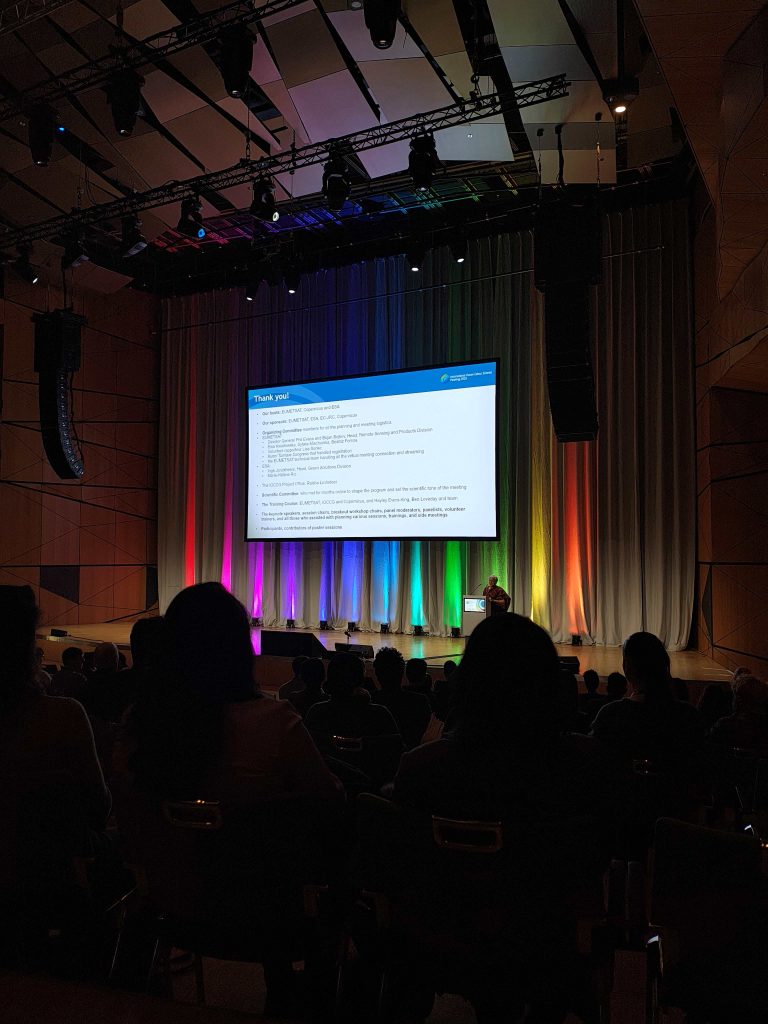
The conference program was structured as follows: each morning began with a plenary session featuring a keynote talk, presentations from space agencies, a panel discussion, and short poster lightning talks to introduce the posters ahead of the poster session. Afternoons continued with another poster session, additional agency presentations, and breakout workshops on pressing topics in ocean color science. I found this format very valuable. It provided a good introduction to the day’s topic, highlighted current developments and opportunities from space agencies, and also created space for more detailed conversations with experts in smaller groups during the breakout workshops. I would like to highlight the lightning talks that were new to me. Although it is quite challenging to present a topic/poster to the entire plenary in 30 seconds, it is a lot of fun and the concept is very useful for gaining an overview of all the posters.
Beyond the formal sessions, the icebreaker reception, conference dinner, and coffee and lunch breaks offered excellent opportunities to network with fellow researchers. These informal discussions led to new ideas and further motivation for my future research.
After the conference, I also attended two training courses at the EUMETSAT Headquarters in Darmstadt. The morning course focused on HyperCP, a community processor for processing hyperspectral above-water radiometry data used to validate satellite products. The afternoon course introduced ThoMaS, a toolbox for creating match-ups between bio-geophysical in-situ data and satellite ocean color products (e.g., Sentinel-3 OLCI). Both courses provided valuable hands-on experiences that I can apply directly to my PhD research.
Overall, the week in Darmstadt has offered unique insights and was truly inspiring and motivating. The supportive atmosphere and the many discussions with colleagues left me feeling energized, and I am looking forward to tackling my next research steps with great enthusiasm. I really would like to thank FYORD and its Travel Grant for enabling me to attend and have these experiences!
Victor