By Leonie Jaeger (ICBM Oldenburg)
The ocean is the dominant climate regulator of our Earth. I am on board the RV Meteor to conduct measurements that helps us better understand the critical processes at the interface between the atmosphere and the ocean. The focus of these measurements is heat and freshwater fluxes, two key drivers that both influence and regulate Earth’s climate.
The ocean stores and transports vast amounts of heat across the whole globe. The exchange of heat between the atmosphere and the ocean is controlled by different surface heat fluxes. The sun emits shortwave radiation, which warms the surface ocean, though part of this radiation is reflected at the water surface. At the same time, the ocean emits longwave radiation towards the sky due to its temperature, some of which is reflected and absorbed by water vapor and clouds. To quantify these fluxes, I use radiometers: sets of upward- and downward-looking sensors that measure radiation coming from the sky and from the ocean. Specifically, pyranometers measure shortwave radiation, while pyrgeometers measure longwave radiation.
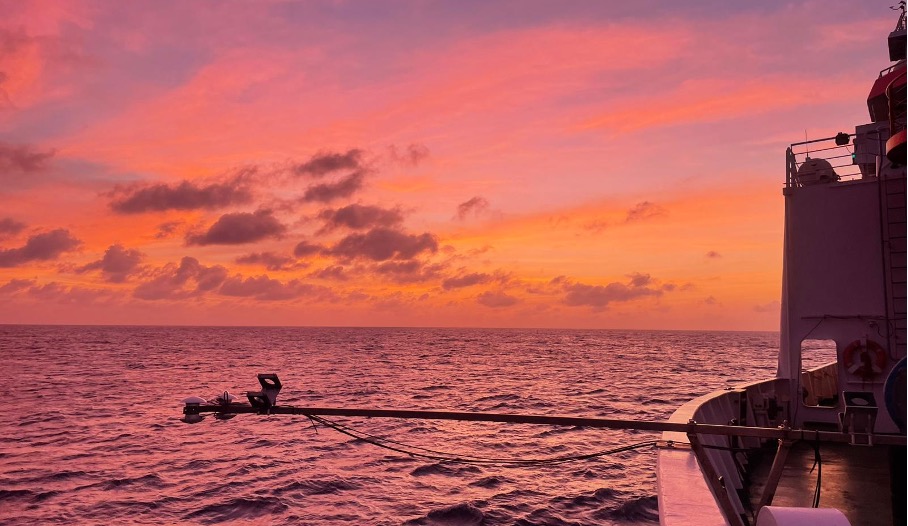
Over the open ocean, freshwater fluxes result from two processes: evaporation and precipitation. Approximately 80% of the global freshwater flux occurs over the ocean, underscoring the ocean’s dominance in the global water cycle and its influence on climate over land. In a warming climate, evaporation is expected to intensify as temperatures rise and the atmosphere’s capacity to hold moisture increases. That makes is very important to better understand these fluxes. However, high-quality measurements of precipitation and evaporation using remote techniques remain challenging. On this cruise, I am using a disdrometer, an instrument that measures rain in high resolution. It allows us to investigate not only the total amount of rain but also the velocity and size of individual raindrops, enabling a detailed characterization of rain events.
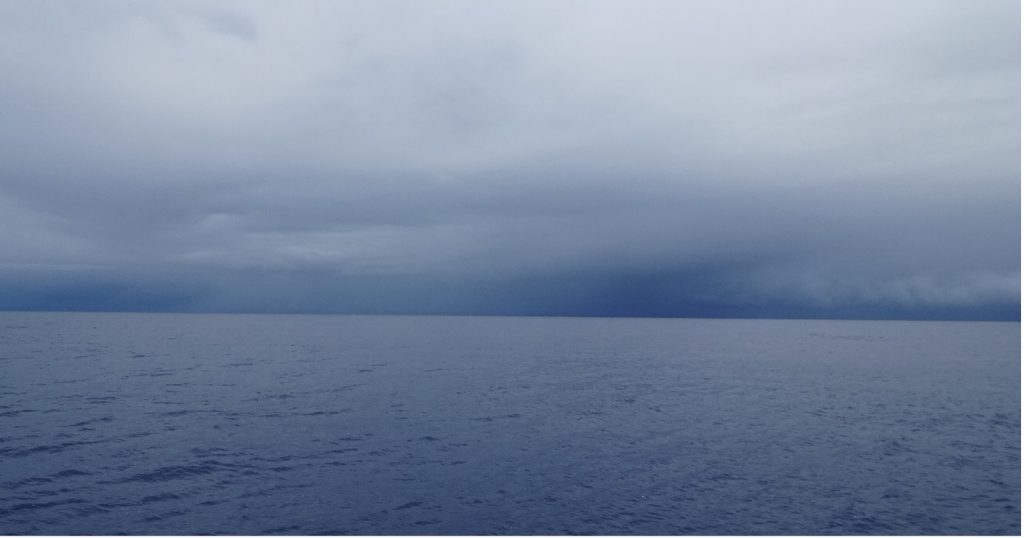
Our cruise track crosses the Atlantic Ocean from South to North, passing the equator. This transect will provide a valuable dataset. Importantly, we will cross the Inter-Tropical Convergence Zone (ITCZ), a region near the equator characterized by heavy rain and thunderstorms. These storms originate from warm, moist air that rises continuously. As the air rises, it cools and condenses, forming thick clouds and intense precipitation. Because the ITCZ is driven by the convergence of trade winds from both hemispheres, it maintains persistent bands of convection. In this zone, these convective systems can trigger even more convection in the atmosphere driving the tropical climate. Together with warm surface temperatures, these high-energy processes can lead to the genesis of tropical cyclones. Thus, the atmosphere influences the ocean, and the ocean influences the atmosphere. Direct measurements at their interface are essential to better understand these processes shaping our climate. My responsibilities include installing and maintaining the measurements systems, as well as data validation and data storage. Maintaining sensors close to the ocean requires frequent cleaning, because sea spray leaves salt deposits everywhere, leading to corrosion. Together with ship-based measurements such as air temperature, wind speed and humidity, and oceanographic underway measurements including continuous observation of the water temperature, salinity, turbidity and chlorophyll, our data will provide a comprehensive dataset to study fresh and heat water fluxes between the ocean and the atmosphere.
Sehr schön
Sehr schön