When moon jellyfish gather in large numbers, the bloom is impossible to ignore. Hundreds or thousands of medusae can suddenly fill a bay or fjord. Because this swimming stage is so visible, it is often the focus of monitoring and research. But the familiar jellyfish is only one chapter in a much more complex life cycle. Before entering the open water, moon jellyfish can spend years as tiny polyps attached to rocks, algae or other hard surfaces on the seafloor. These polyps reproduce asexually and release young jellyfish when conditions are suitable. Our new study in Trondheimsfjorden, Norway, shows why this hidden stage deserves much more attention. The central finding is that the stage that moves the least may be the stage that gives a jellyfish population its greatest stability.
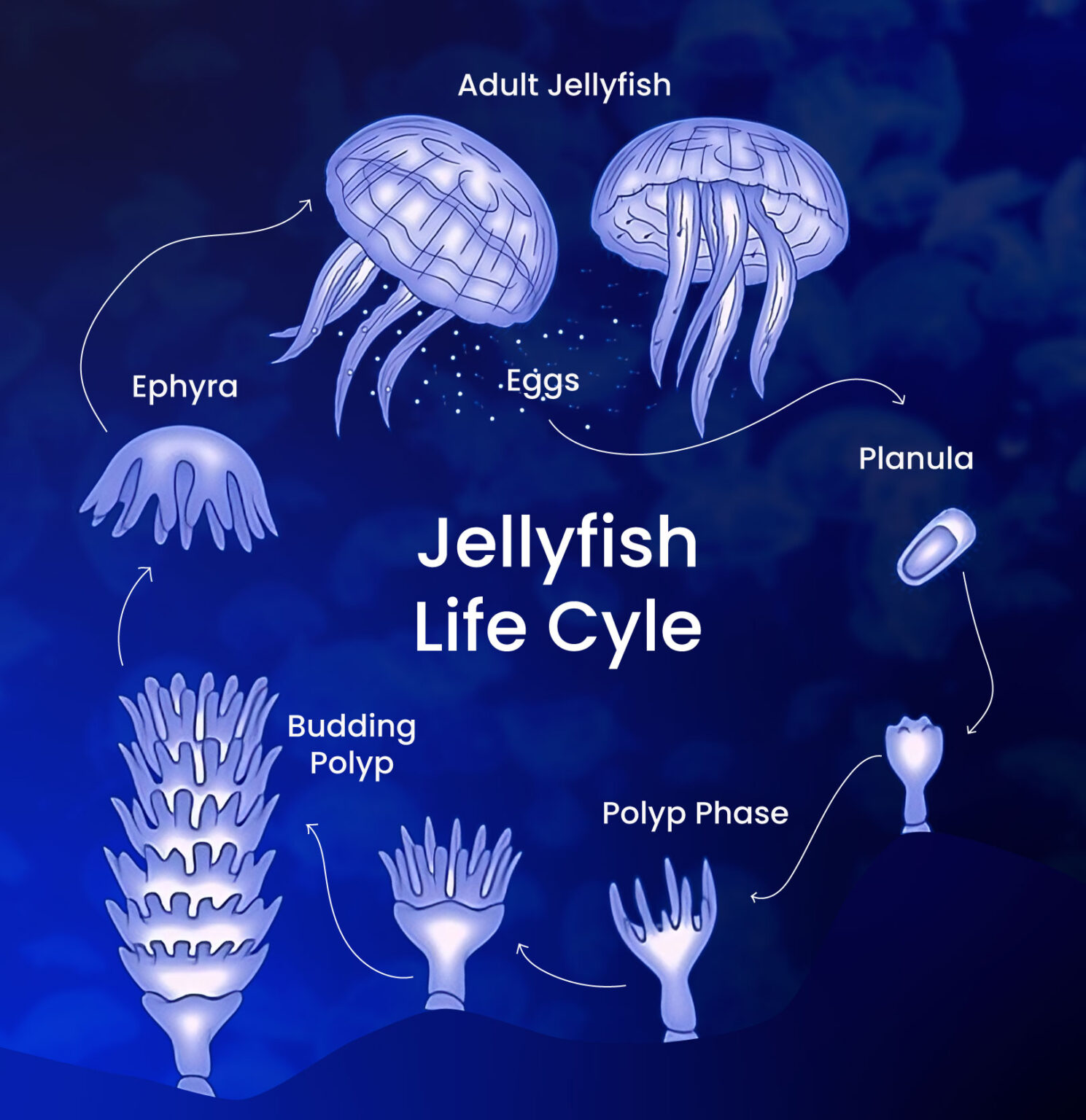
Image courtesy: https://sciencedigest.org/facts-about-jellyfish/
One animal two worlds
Moon jellyfish (Aurelia aurita) alternate between two contrasting habitats. Polyps remain attached to the seabed and can persist locally for years. Medusae live in the water column for a much shorter time and can be transported by currents across the fjord.
This creates an ecological puzzle. If medusae can travel widely, should populations throughout a fjord become genetically well mixed? Or can local structure survive because the stationary polyp stage retains diversity in particular places? Our new study in Trondheimsfjorden, Norway, shows that these hidden polyps may be crucial for maintaining genetic diversity. We combined field observations, genetic analyses of 572 samples and a model of movement through fjord currents. We found 70 genetic variants—and a striking difference between life stages.Polyps consistently held high genetic diversity. Medusae varied much more between places and years and were sometimes dominated by only a few variants. The polyps therefore appear to act like a biological seed bank: many possibilities remain stored out of sight, while each year’s conditions determine which ones emerge.
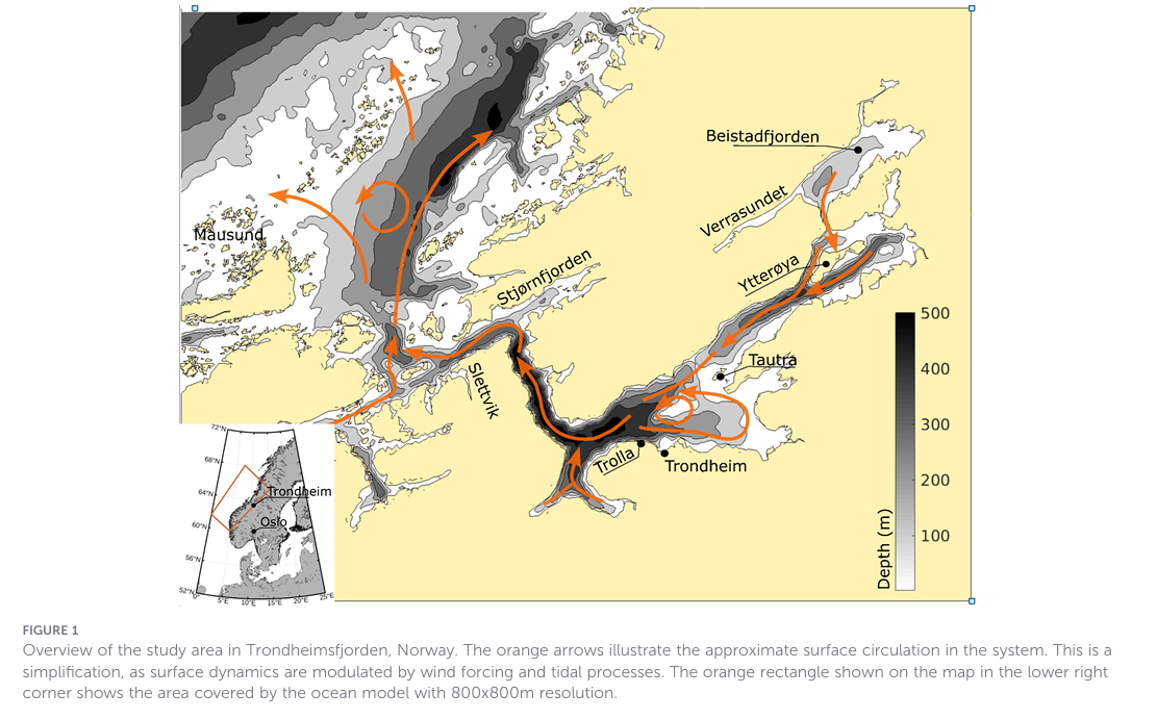
Currents alone could not explain the genetic patterns: the model predicted more mixing than was observed among medusae. Transport is therefore only part of the story. Local retention, temperature, food, survival and reproductive timing can filter which variants reach the visible stage.
This matters because jellyfish blooms affect food webs, fisheries, tourism and coastal infrastructure. Better forecasts will require more than counting medusae or following currents. We must also monitor polyp habitats and understand what controls transitions between life stages.
The wider lesson is simple: to understand the connectivity and resilience of marine organisms, we cannot study only the most visible, or most mobile part of their lives.
Paper: Majaneva, S., Ellingsen, I., Javidpour, J. and Aberle, N. (2026). Benthic life stages retain fjord-scale population structure despite pelagic dispersal. Frontiers in Marine Science, 13:1895768. https://doi.org/10.3389/fmars.2026.1895768