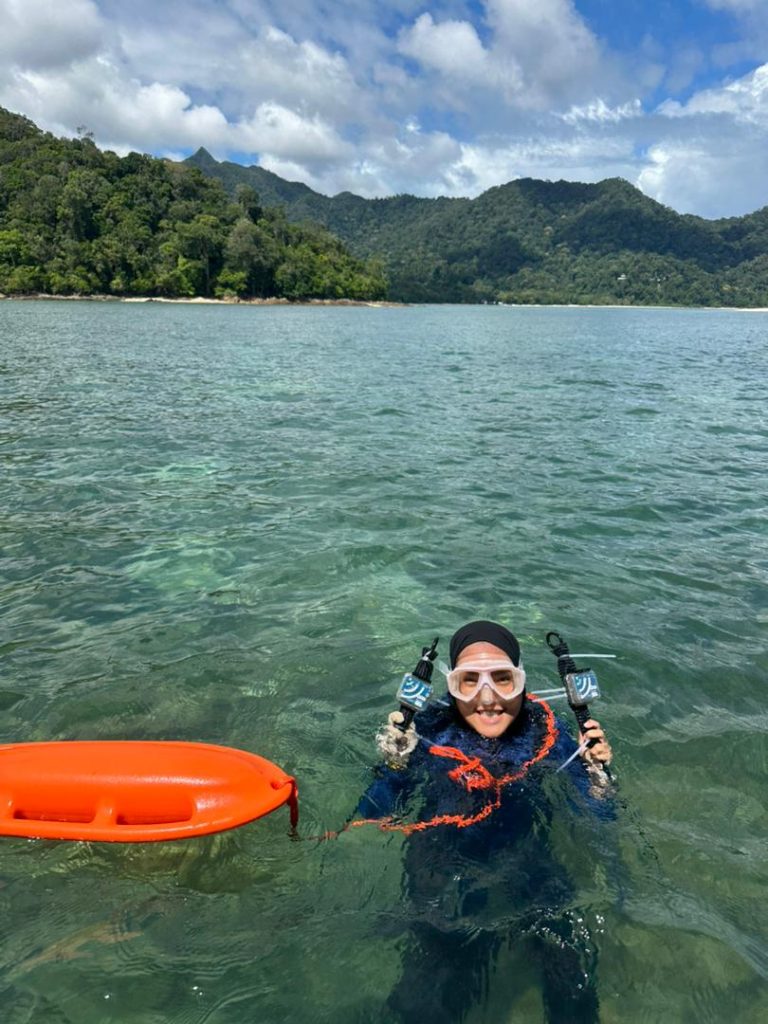
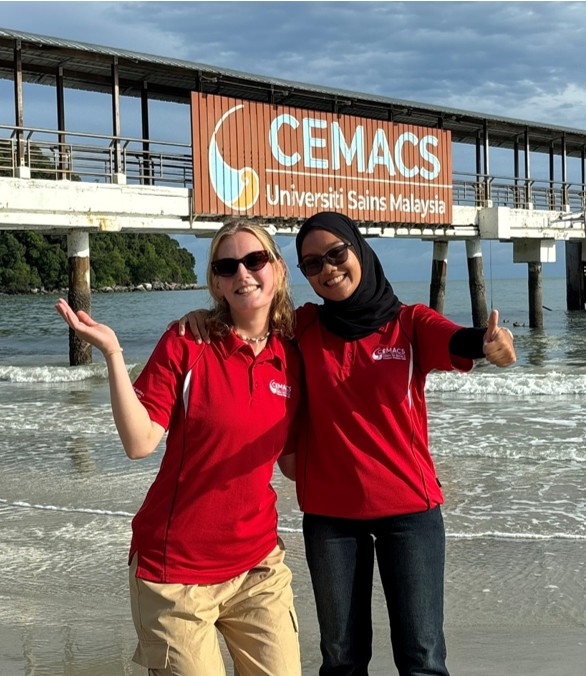
Selamat Datang and welcome to the hot and sweaty country of Malaysia! Ever since we, Leonie and Najwa, have arrived in Penang, the northwestern island of Malaysia, in April this year, it has been a constant 30 degrees with an average humidity of 70%. However, it feels both hotter and more humid than that. Unfortunately, the weather will not change much during our stay as Malaysia lies very close to the equator (at latitude 5°N). Thus, it has no seasons, but a nearly constant temperature and day/night rhythm of 12 hours.
Beginning to adapt
The sun is just peaking above the sea when I (Leonie) have to leave my house. The bus leaves (more or less) always at the perfect time to watch the sun slowly rise over the ocean. I use the 30 min bus ride, which costs me about 2 Ringitt (or ~20 cent), to wake up and prepare for the day ahead at the Centre for Marine and Coastal Studies (CEMACS). During the bus ride beaches, restaurants, cafés and small towns pass by in the window. Especially, one secluded beach and its beach house, which is for sale, make the bus ride go by fast – thanks to daydreaming about living there. When I arrives at 8 am at the entrance to the National park, in which the institute is located, Najwa is already waiting for me. She only needs a 5 minute car ride to get there from home, since she found an apartment close by. Now we just have to wait for the boat to take us to the institute within the national park. Technically, a 40 min hike through the park would also do the trick, but both of us are not ready for such a sporty activity at 8 in the morning and a daily boat ride is so much more fun anyways.
CEMACS lies in the heart of the Taman Negara Pulau Pinang, the national park of the island of Penang in northwestern Malaysia. Because of that, it’s quite a way to the big city of Georgetown and thus sources of noise, disturbances and pollution are far away. This is especially important for this year’s GAME project as we aim to find out whether underwater soundscapes influence the formation of hard-bottom communities.
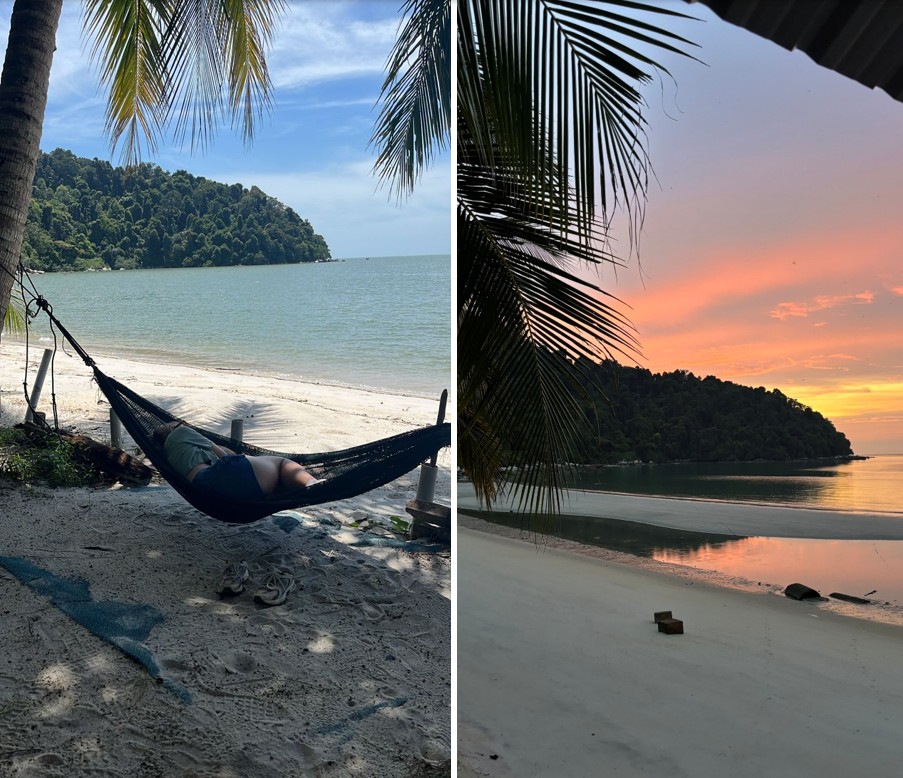
The sunset by the institute (right, © Leonie).
We are trying to find answers to this question in the warm and salty ocean right in front of the gates of CEMACS. For that we deploy large metal frames that carry settlement panels into the sea. Two of those frames will additionally be equipped with an underwater speaker with which we can playback – in principle – any kind of sound we like (trust me, it was tested and it was a good day). To distinguish between the experiments that the two of us will conduct, we will use different soundscapes. One will focus on anthropogenic noise, i.e. the sound that is emitted by either a fishing or a container vessel. The noise will be played back at random times during the day, but will accumulate to a total of 30 minutes every hour. The other team member will focus on a natural soundscape that will be recorded at a healthy underwater location close by. The settlement panels will be retrieved regularly in order to find out how and if the playbacks are affecting the composition of the establishing hard-bottom communities.
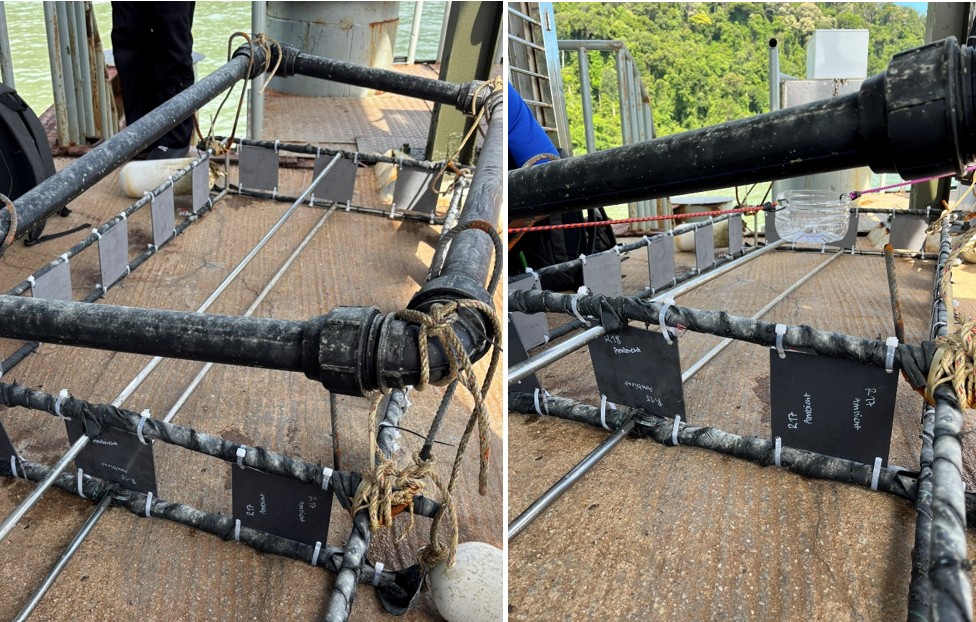
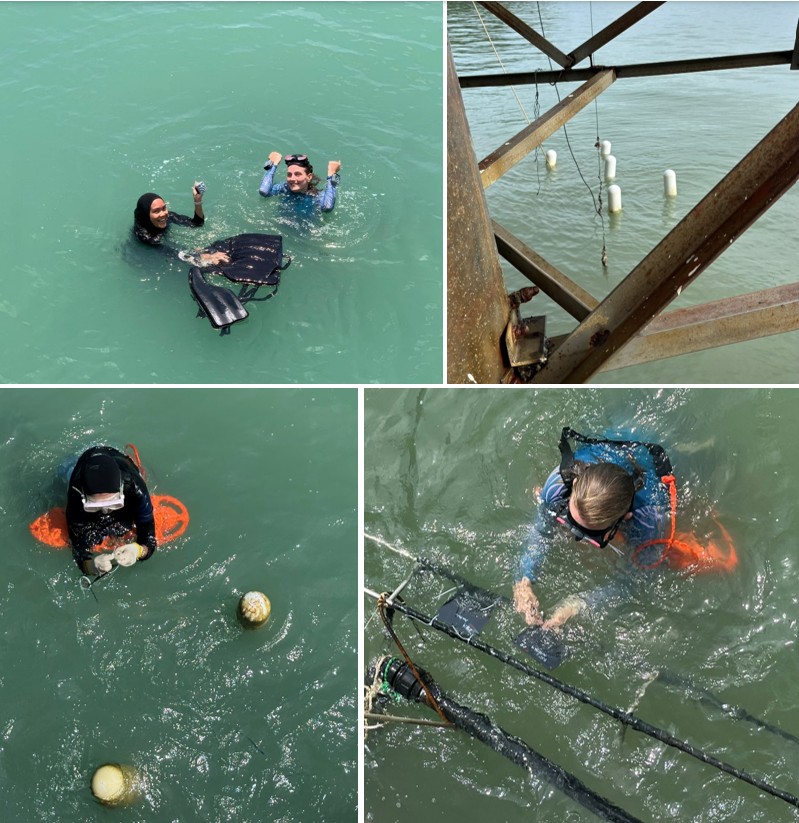
Sounds easy enough, yea? Technically it is, but the nature can be treacherous around here. Jellyfish, like the Ribbon Jellyfish (Chrysaora chinensis), are daily visitors and as pretty as they are, as much does it hurt to get stung by them. After some painful incidents, we now wear full body coverage whenever we are in the water to minimize the skin contact. One person, who stands on land, is always watching the water surface to give a warning in case one of us comes too close to one of the jellies. It’s important to always have someone watching, since we don’t see a lot when we are in the water ourselves. The visibility can be so poor that you cannot even see your hand in front of you. Which is why we struggle to detect the up to 50 cm long tentacles that can sting us. The jellies drift with the currents and like to hang around the jetty, where our frames are deployed.
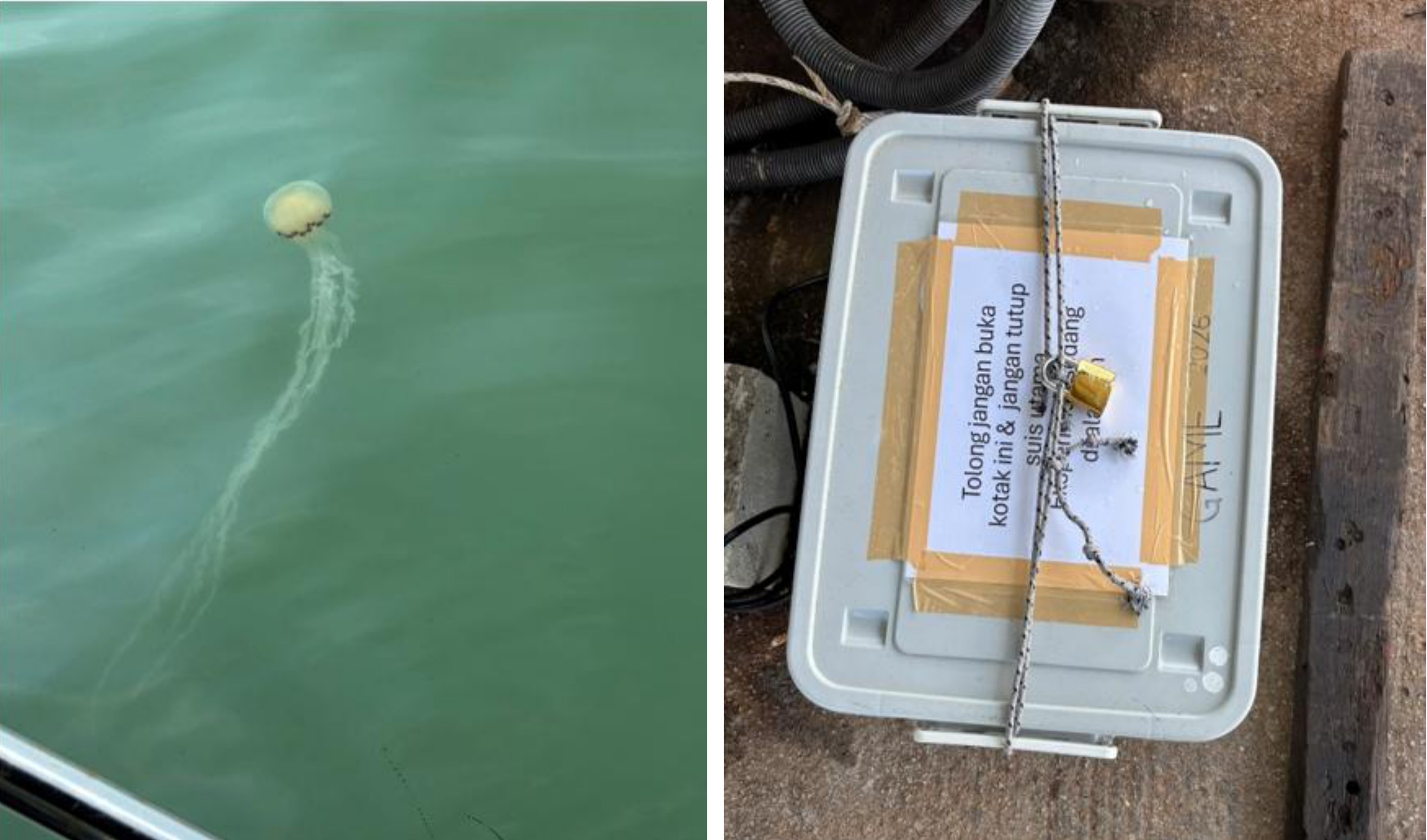
But even on the land, it’s not entirely safe. Since CEMACS is in the middle of the national park, it is not uncommon to see animals around the institute. The cats and even the lizards are rather cute to look at but the monkeys and the mosquitos? A nightmare! Before the morning boat even leaves at 08:10 both of us already have 5 mosquito bites, a constant buzzing in the ear and are always itchy. Want to have your lunch by the water on the beach? Think twice because monkeys can and will steal your food. Even the laboratory is not safe and has to be locked up monkey-proof.
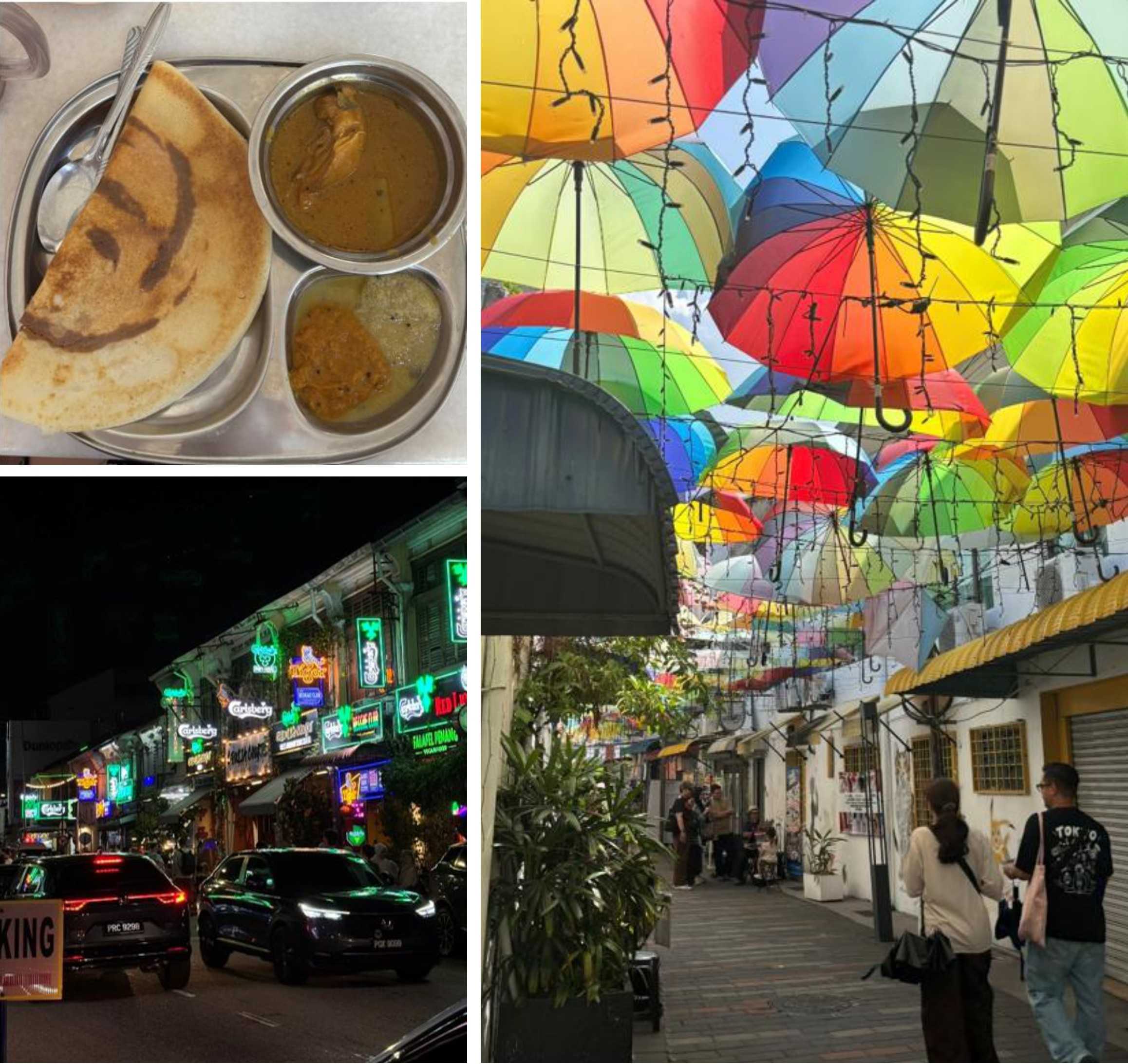
When we are not blasting ABBA or LinkinPark while setting-up our experiment or trying not to get stung by jellyfish during maintenance work in the water, we can actually enjoy Georgetown. The city is about 1 hour by bus from our living quarters and offers the exact opposite of CEMACS. It is loud, full, bright and brimming with life (humans, not animals). Due to its rich mix of Malay, Chinese, Indian and indigenous cultures clashing together, you can find every kind of food downtown. From delicious savoury food over sticky fruits and drinks to sweet desserts. You can find these tasty items all over the island often in hawker stalls or cute restaurants. Of course, you can also go shopping wonderfully (much to the dismay of Leonie and her limited baggage weight for the flight back home) or just walk around the town and get swept up by the street murals, salty breeze and picturesque buildings.
Do we have to restart?
The deployment of our frames went smoothly, attaching and retrieving the HydroMoths (i.e. hydrophones) went smoothly, and the preparation for the sampling week went smoothly. Probably, everything went a bit too smooth in hindsight, because when the sampling week arrived, nothing went smoothly.
We seemingly lost our entire control frame (i.e. frame without sound playbacks).
During our daily boat ride towards CEMACS we have normally perfect view to see the white buoys of our control frame floating in the distance. Except on that Tuesday. The weather was a bit rough over the weekend and it was still windy and wavy, so we tried to argue that the glare of the sun plus the waves are messing with our eyesight. Surely, we would see it once we get out there to take off and analyse our panels. But when our boat reached the exact coordinates, at which we deployed the frame, there was nothing. No buoy. No rope. No frame. No hint whatsoever. Immediately, we got into the water and were searching the area with the help of two colleagues. But still, we found nothing. The visibility was not in our favour and Najwa got stung by a jelly, what didn’t make the situation better.
After we had to realize that the possibilities were high that our frame got either stolen by someone or it got washed away during the storms, we accepted defeat. Over the next couple of days, we were analysing the panels from the frame with sound playback (aka speaker frame) and discussed options with our supervisors. Upon agreement we started one more search and rescue mission. This time we were dragging an anchor across the seabed for quite some time. Clammy hands, shallow breath and elevated heartbeat. Everyone on the boat was on edge after 30 min of searching. Our colleague held up his hand. The boat stopped. He got something. To everybody’s surprise he pulled up our control frame!! It was completely covered with barnacles, so that the frames and panels were barely distinguishable but we got it back. It obviously became to heavy for the buouys that we attached to it and sank to the seafloor. Immediately, we got to work: Pulling the frame onto the boat, cutting off each panel to inspect it in the lab and cleaning the frame (which was equally stinky, disgusting and difficult).
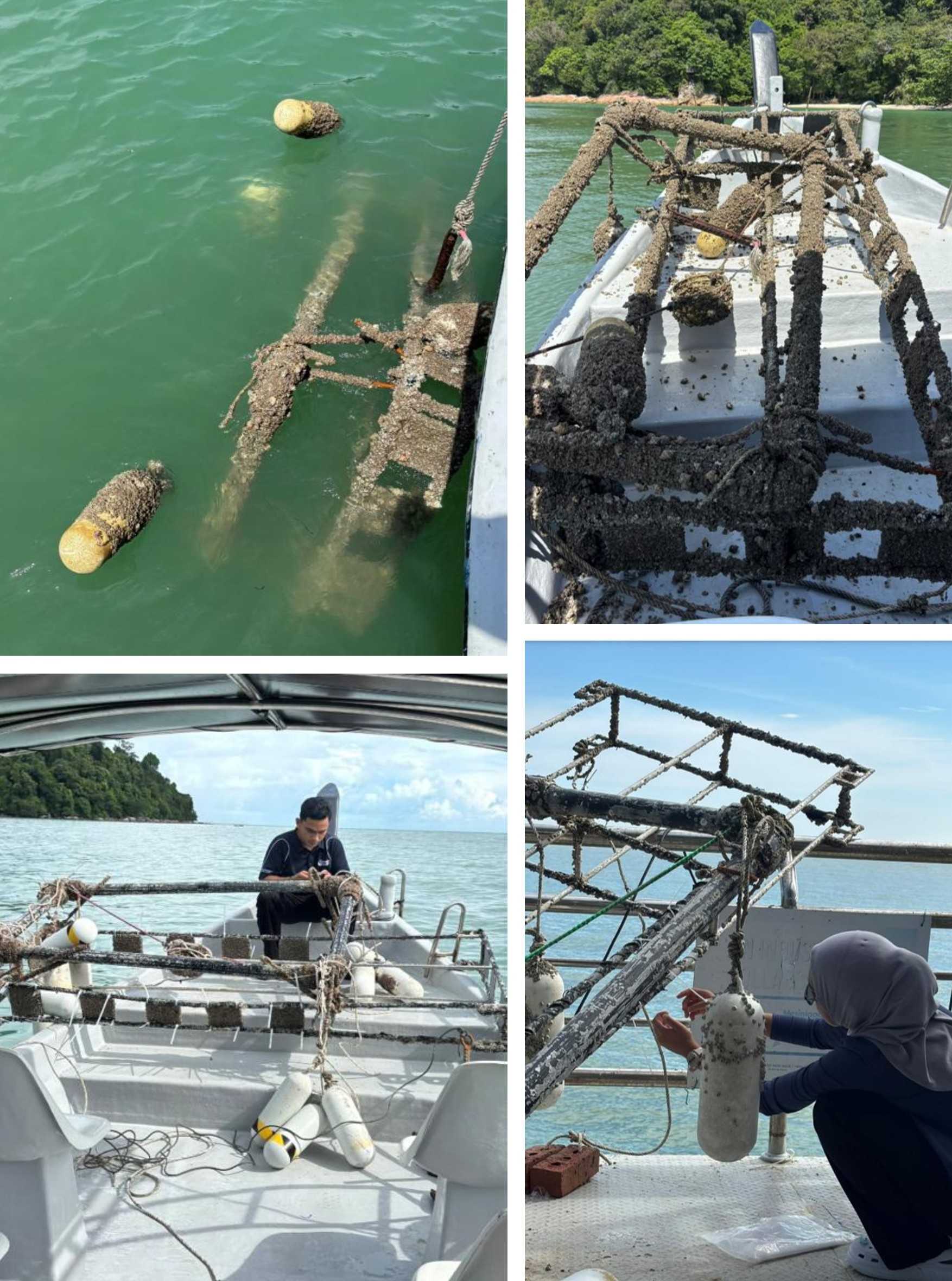
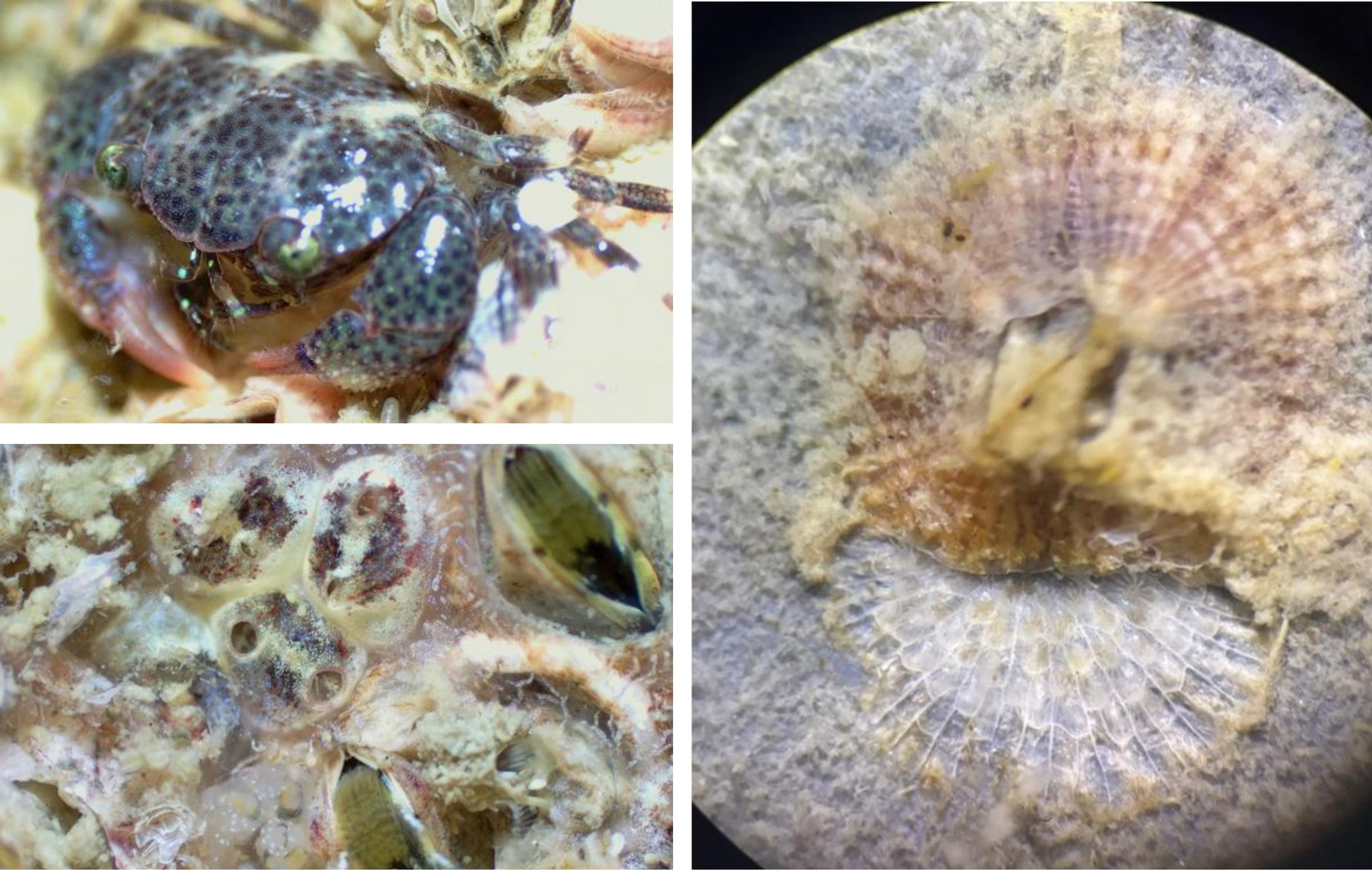
Now the hard work began: analysing the panels. We first weighed and photographed them to estimate the biomass and the degree of coverage on them. Then each and every panel needed to be inspected through a stereomicroscope to identify as many organisms as possible. Most of the panels were covered with barnacles, to be precise it was Amphibalanus amphritite. But apart from that we also found some worms that built themselves tubes on our panels (probably individuals from the family Sepulidae and Spionidae) and were thus sessile too, some bryozoans, colourful tunicates and a lot of small shrimps, crabs and flatworms that were roaming around. Just within four weeks, the sad-looking grey PVC panels have become a location for the smaller animals of the ocean to settle and start their lives.
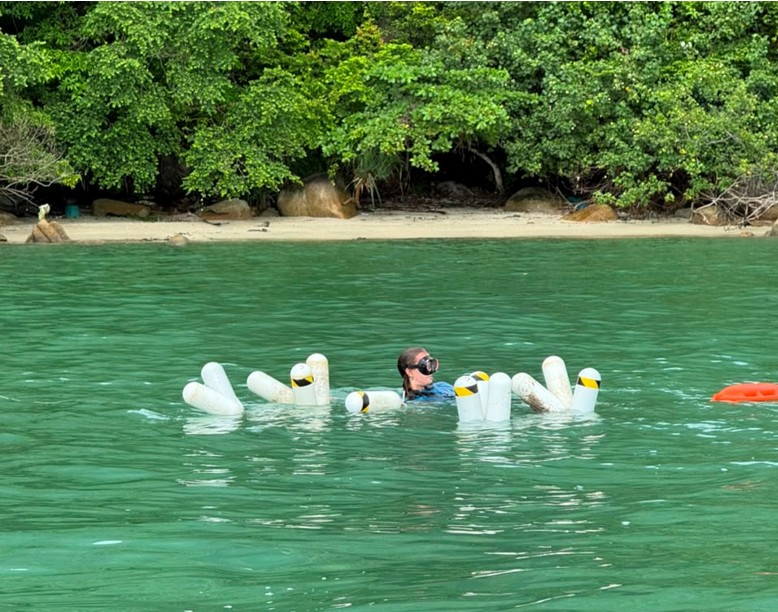
Before we deployed the frame again, we attached a total of 13 buoys and have now a little buoy party in the water which never fails to make us giggle. They are supposed to prevent the frame from sinking again.
The natural soundscape dilemma
Now that Leonies experiment is running (more or less smoothly) it is time to concentrate on the preparation for Najwas experiment which will focus on the natural soundscape.
At first, CEMACS and Penang seemed like the perfect place to begin collecting natural soundscape recordings. We believed it would provide a healthy, natural, and undisturbed underwater acoustic environment. However, despite being located in the national park with little human activity per se, Penang is one of Malaysia’s busiest coastal regions. The constant movement of ferries, fishing boats, tourist vessels, and commercial shipping creates a persistent layer of anthropogenic noise beneath the water. Instead of capturing the quiet rhythms of marine life, many of the recordings that we made were dominated by human activity. It became clear that Penang was not the ideal location for getting an undisturbed soundscape on tape. But where can we find that?
The search led us to Langkawi, an archipelago of 99 islands located just 100 km north of Penang near the border with Thailand. Renowned for its clear waters, rich marine biodiversity, and relatively low levels of coastal development in certain areas, Langkawi offered a far more promising environment for natural underwater acoustic recordings.
Within Langkawi, our attention turned to Pulau Anak Datai, a small island situated off the northwestern coast of the main Langkawi Island. It’s surrounded by coral reefs, rocky shorelines, and lush tropical rainforest. Compared to many of the more popular tourist destinations in Langkawi, Pulau Anak Datai experiences considerably less boat traffic, allowing its underwater environment to retain a more natural acoustic character. These conditions make it an ideal site for our needs.
With the study site finally selected, the next challenge was deploying the HydroMoths.
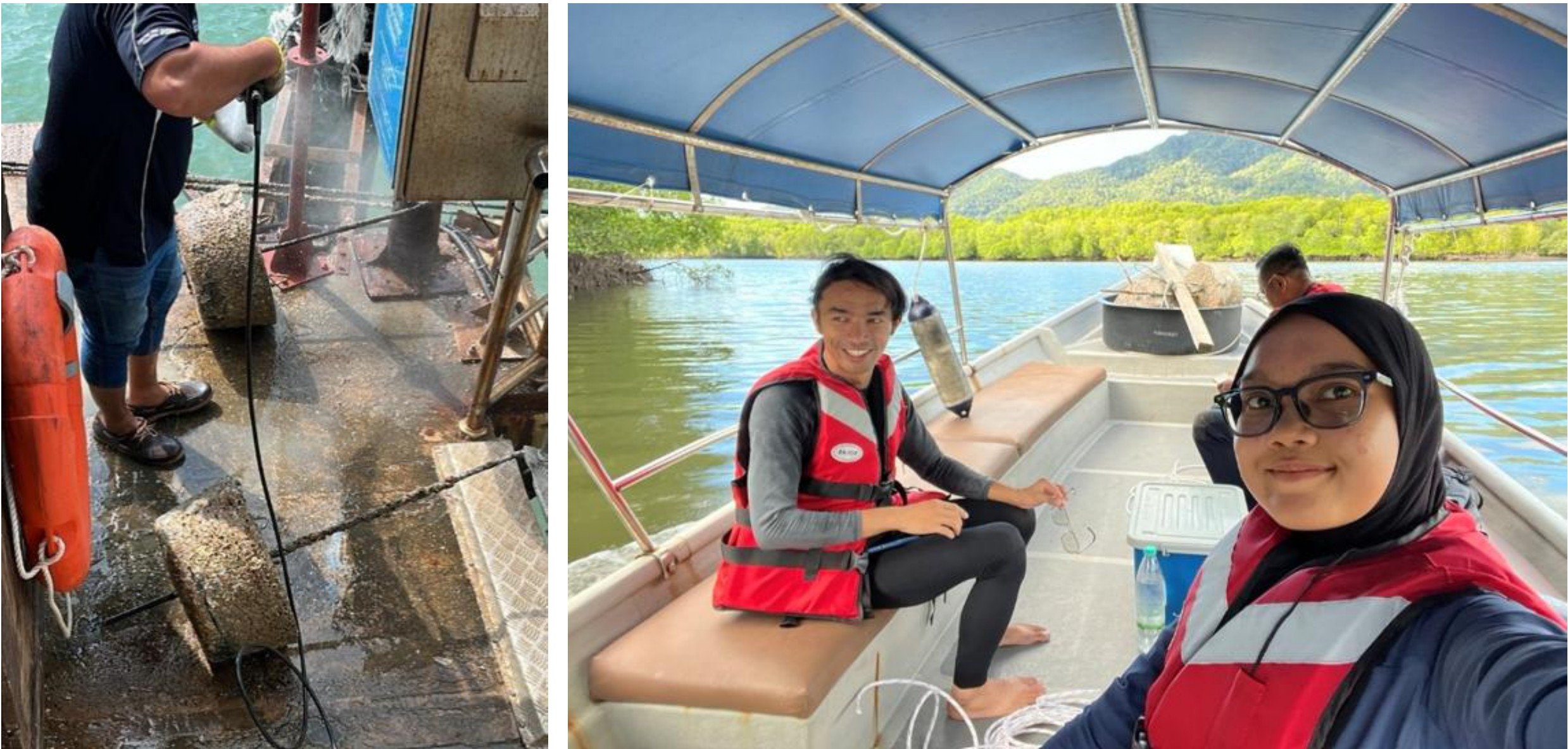
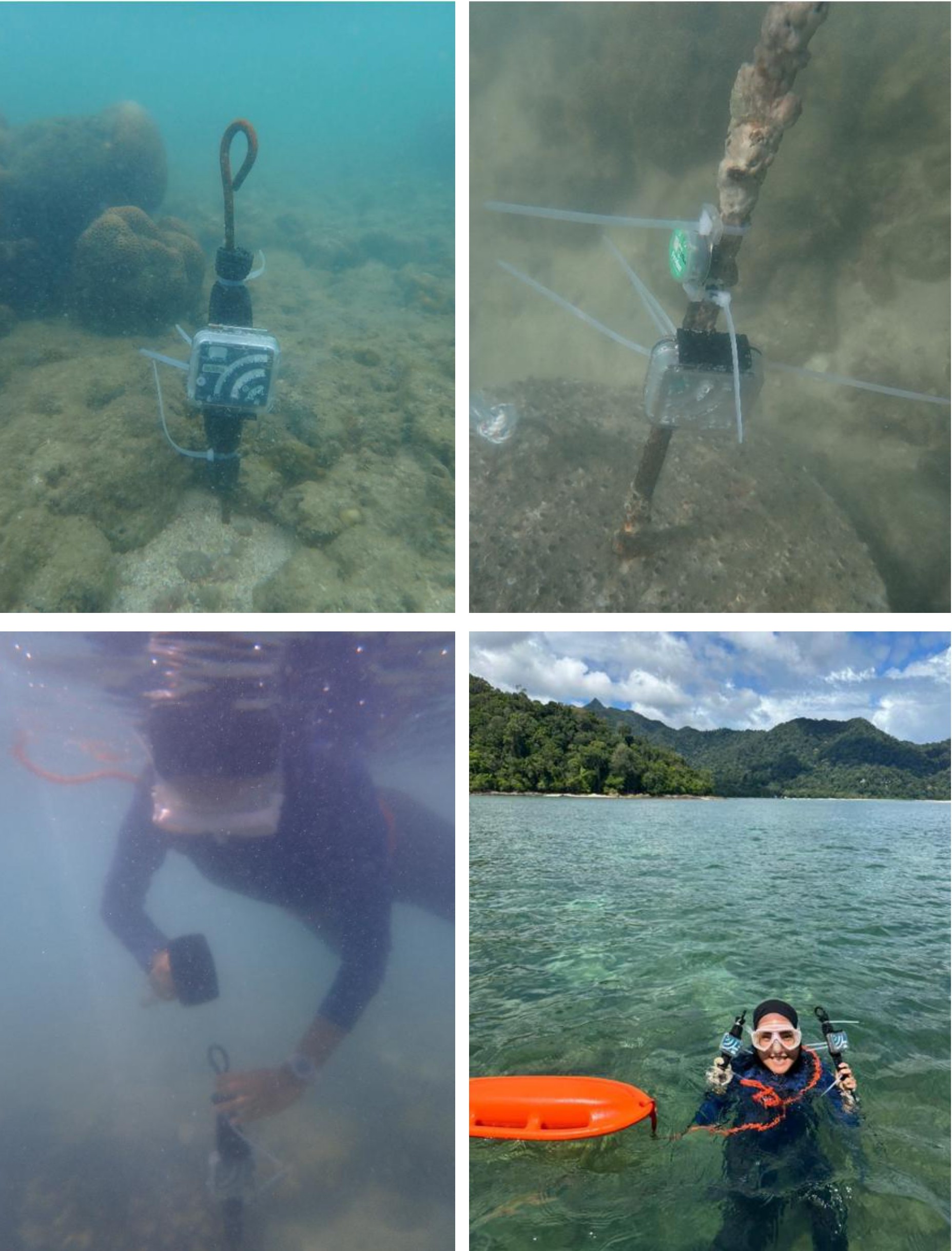
The recordings were scheduled over five consecutive days, with two HydroMoths deployed simultaneously to maximize the number of sites we could survey. To secure the HydroMoths underwater, we brought along two concrete blocks fitted with metal poles from CEMACS. These were previously used by another GAME team, and at the time, they seemed like the perfect solution. The concrete blocks were heavy, stable, and, most importantly, gave us peace of mind. We were worried about the HydroMoths moving with waves and currents, creating unwanted handling noise in the recordings. We were also concerned about the possibility of losing the devices whether due to storms, strong currents, or even someone discovering and taking them. But due to the seabed at Pulau Anak Datai being covered in rocks, corals and just life, it was difficult to position the blocks securely. The handling became a struggle, above and underwater.
No, we needed to adapt. Field work has a funny way of destroying the illusion of a thought through plan and pointing out every little flaw. We thought the original plan was fool proof. Turns out, it was not.
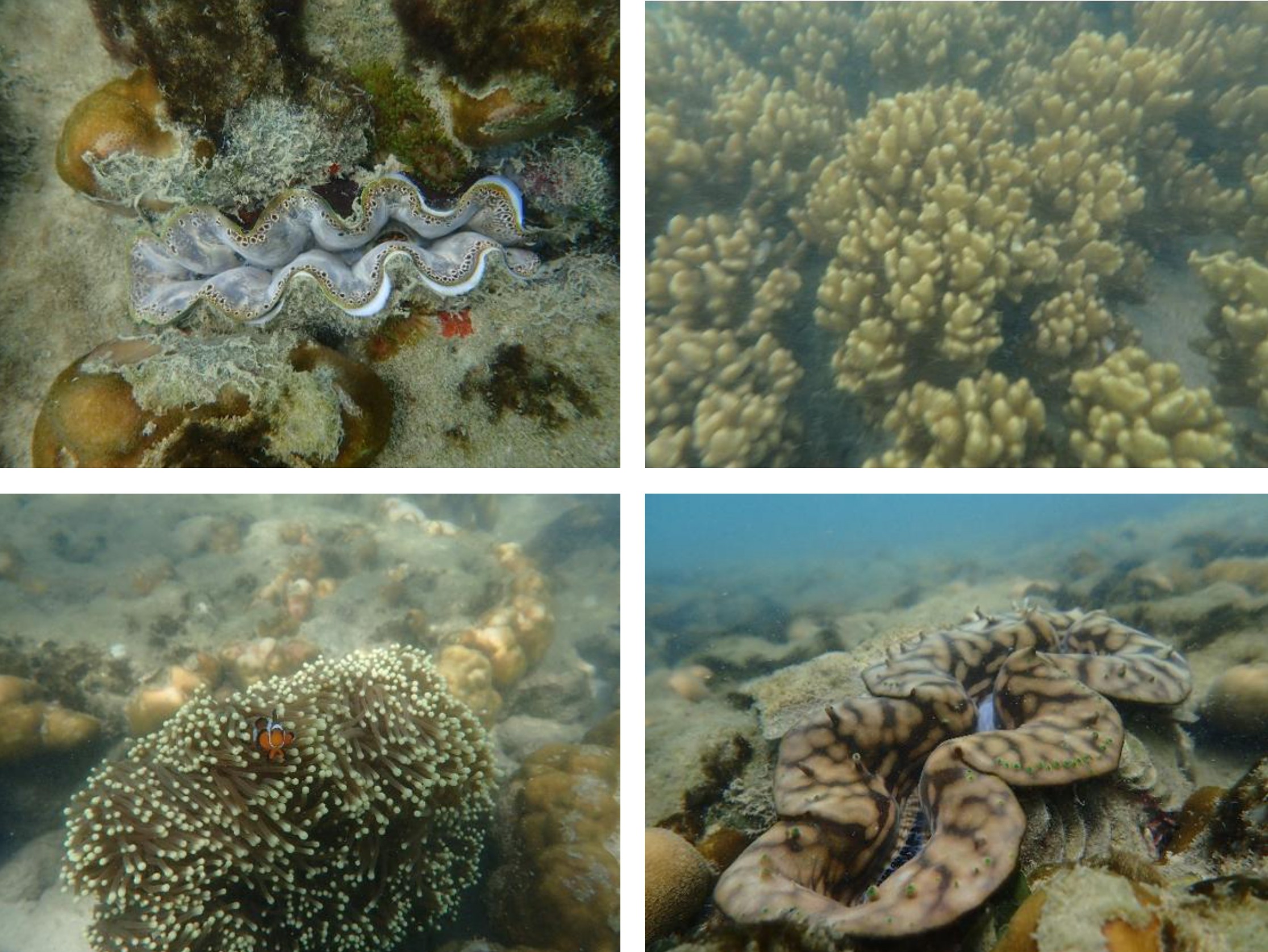
After surveying the area more closely and brainstorming some ideas, we purchased ~100 cm long metal poles, which we would simply hammer down into the ground between the corals. We then could attach the HydroMoths onto them. Fool proof, for real.
The new setup was lighter, easier to transport, quicker to deploy, and required only a fraction of the energy needed for the concrete blocks. What initially felt like a major setback showed us that flexibility and adaptability are the most important qualities during field work. And keeping a cool head, which can be the most difficult part.
Najwa is now owner of hours on end of the natural underwater soundscape in Langkawi. In order to actually use it as a playback, though, she has to listen, filter, crop and edit the recordings.
Every obstacle from searching for a truly natural soundscape to redesigning our deployment method became a lesson that no classroom could have taught. In the midst of our experiment, we are still learning to adapt, be patient with ourselves and stay curious about the processes and solutions that fieldwork demand. The ocean rarely follows our plans, but perhaps that is exactly what makes studying it so rewarding. Jumpa lagi! (See y’all!)